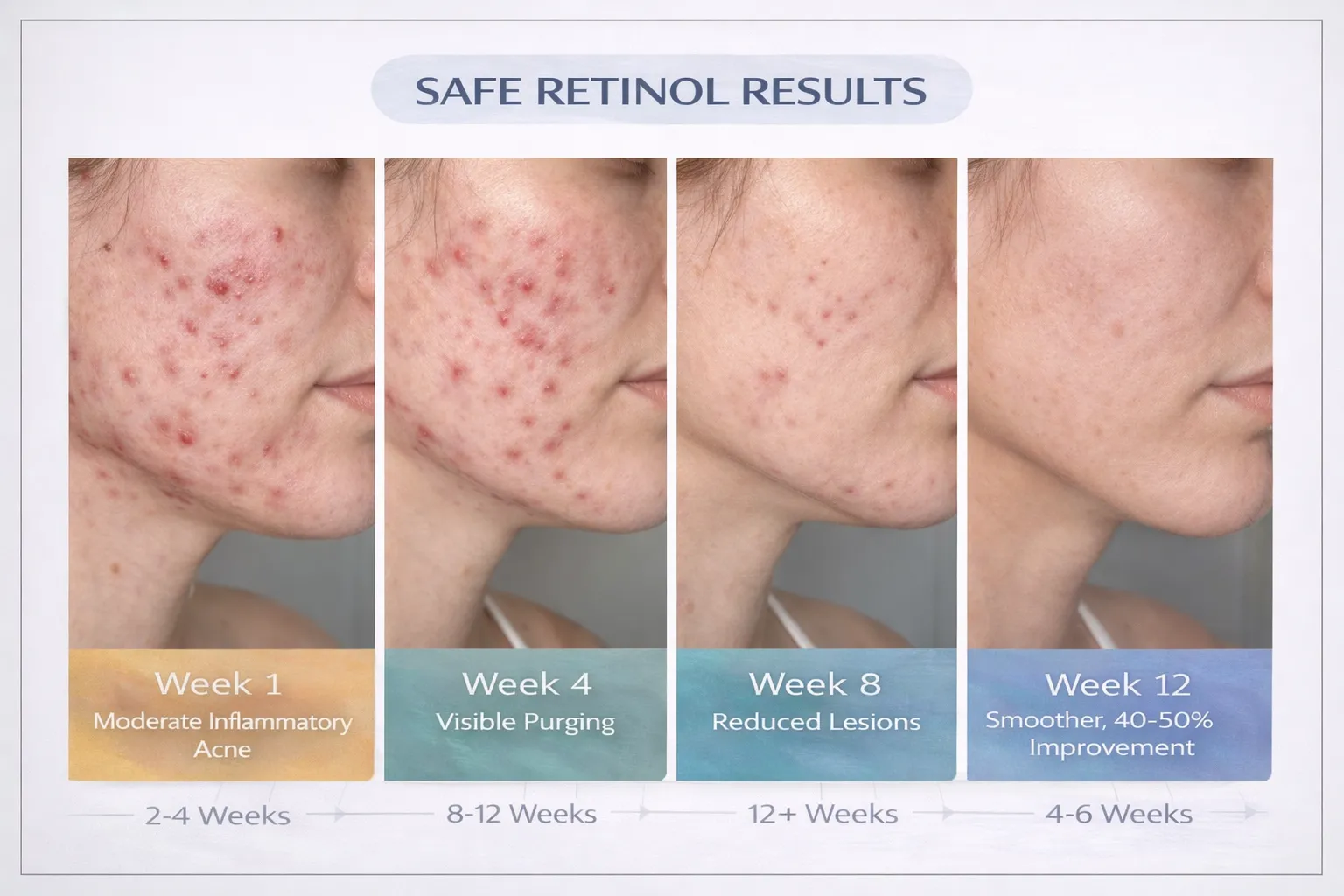
Retinol has earned its place as the gold standard for acne treatment-not by accident, but through decades of clinical validation and real-world results. If you’ve searched for acne solutions, you’ve likely encountered retinol recommendations everywhere, from dermatologists to Reddit threads. But you’ve also probably seen the cautionary tales: the intense side effects, the “retinol burn,” the initial purge that makes skin worse before it gets better.
This guide answers the question that keeps acne sufferers awake at night: Can retinol actually help my acne without destroying my skin barrier? The answer is yes-but only when you understand how it works and how to use it correctly.
What Is Retinol and How Does It Work on Acne?
Retinol vs. Retinoids: What’s the Difference?
The terms “retinol” and “retinoid” are often used interchangeably, but they’re not identical-and this distinction matters for your skin.
Retinol is a cosmetic-grade form of vitamin A that you can buy over-the-counter in serums, creams, and lotions. Your skin must convert retinol into retinoic acid (the active form) through a two-step enzymatic process. This conversion takes time and isn’t 100% efficient, which is why results are gradual but side effects tend to be milder.
Retinoids is an umbrella term for all vitamin A derivatives, including:
- Tretinoin (Retin-A): A prescription retinoid that’s already in retinoic acid form-no conversion needed. It’s potent and fast-acting but causes more irritation, dryness, and sensitivity. Studies show tretinoin at 0.025% can reduce acne lesions by 40-50% within 12 weeks.
- Adapalene (Differin): A selective third-generation retinoid available both over-the-counter and by prescription. It’s less irritating than tretinoin but comparably effective for acne. Clinical trials show adapalene 0.3% produces similar results to tretinoin with better tolerability.
- Tazarotene: A potent prescription retinoid. Research indicates that once-daily tazarotene 0.1% is more effective than tretinoin 0.025% for reducing papules and open comedones, but it’s also more irritating and typically reserved for severe acne.
- Trifarotene: The newest topical retinoid, specifically engineered to target RAR-γ receptors (which comprise 90% of epidermal retinoic acid receptors). It’s effective for both facial and truncal acne with strong clinical efficacy data.
The practical takeaway: Retinol is gentler and more forgiving for beginners; prescription retinoids are stronger and faster but require closer monitoring.
How Retinol Treats Acne on a Cellular Level
Understanding acne at the cellular level reveals why retinol is so effective. Acne doesn’t develop from a single cause-it results from four interconnected processes:
1. Follicular Hyperkeratinization (Clogged Pores)
Normally, dead skin cells shed naturally from the skin’s surface and move up through the hair follicle. In acne-prone skin, this process malfunctions. Skin cells become sticky and clump together, blocking the pore. Think of it like a traffic jam inside your follicle.
Retinol activates retinoic acid receptors (RARs) in skin cells, normalizing this desquamation process. It essentially “unclogges the traffic” by promoting orderly cell turnover. Clinical studies using transcriptomics (gene expression analysis) show that retinoids reduce keratinocyte proliferation and restore normal differentiation within 1-8 weeks of use.
2. Sebum Overproduction
Acne-prone skin produces excess sebum (oil), which accumulates in clogged pores and feeds acne-causing bacteria. Retinol reduces sebum production through a process involving sebocyte apoptosis-essentially triggering sebaceous gland cells to self-destruct in a controlled manner. This effect is particularly strong with prescription retinoids (isotretinoin can reduce sebum production by up to 90%), though topical retinol also provides meaningful sebum regulation.
3. Bacterial Colonization
Cutibacterium acnes (formerly Propionibacterium acnes) thrives in the oxygen-poor, sebum-rich environment of clogged pores. Retinol doesn’t directly kill bacteria, but by normalizing follicular turnover and reducing sebum, it creates a hostile environment for bacterial growth. Additionally, retinol suppresses Toll-like receptor (TLR) signaling, reducing the immune system’s inflammatory response to bacterial presence.
4. Inflammation
Even if bacteria are present, acne only becomes a visible lesion when the immune system overreacts. Retinol dampens this response through multiple pathways:
- Inhibits the Activator Protein-1 (AP-1) pathway, reducing pro-inflammatory gene expression
- Reduces cytokine and nitric oxide release
- Suppresses leukocyte migration into the follicle
This is why retinol helps both inflammatory (red, swollen) and non-inflammatory (blackheads, whiteheads) acne.
Is Retinol Good for Acne and Other Skin Concerns?
For Acne: Highly Effective
Clinical evidence consistently supports retinol’s efficacy. In a comprehensive analysis of topical retinoid use, retinoids demonstrated statistically significant reductions in both inflammatory (papules, pustules) and non-inflammatory (comedones) lesion counts. The degree of improvement depends on acne severity: patients with moderate-to-severe acne see the most dramatic results (40-60% reduction in lesions), while those with mild acne still benefit but improvements are more modest.
Retinol is considered first-line therapy for mild-to-moderate acne and an essential component of treatment protocols even for severe acne (often combined with oral antibiotics or hormonal therapy).
For Fine Lines and Wrinkles: Very Effective
Retinol stimulates fibroblasts-the skin cells responsible for collagen and elastin production-through retinoic acid receptor activation. In clinical studies, topical retinol (0.4% applied for 12 weeks) reduced wrinkle depth by up to 20% and improved skin elasticity. The effect is cumulative; longer use (6-12 months+) produces more dramatic collagen remodeling. Prescription-strength retinoids like tretinoin work faster but require dermatologist oversight.
For Dark Spots and Hyperpigmentation: Effective
Retinol fades dark spots through two mechanisms:
- Tyrosinase inhibition: Retinol inhibits the enzyme responsible for melanin synthesis, literally stopping new pigment production.
- Accelerated cell turnover: By shedding cells faster, pigmented cells exit the skin’s surface more quickly, fading marks over time.
A 16-week clinical trial found that retinol 0.3% reduced melanin concentration in hyperpigmented areas by 35%, with cumulative benefits extending to the 24-week mark. It’s slower than prescription hydroquinone but gentler and suitable for long-term use without the risks of ochronosis (dark discoloration from chronic hydroquinone use).
Benefits of Retinol for Acne-Prone Skin
Clearer Pores and Fewer Breakouts
The most immediate benefit of retinol is pore clarity. Within 4-6 weeks, most users report a visible reduction in comedones (blackheads and whiteheads) and overall lesion count. This effect is driven by normalized follicular keratinization-retinol literally restores the skin’s ability to shed dead cells in an orderly fashion.
For inflammatory acne, the anti-inflammatory effects typically take 6-8 weeks to manifest fully, though some redness reduction occurs earlier. By the 12-week mark, clinical studies show a 40-50% average reduction in papules and pustules.
The long-term benefit is sustained remission. Users who maintain retinol therapy experience lower recurrence rates compared to those who discontinue treatment, suggesting retinol provides lasting improvement rather than temporary suppression.
Retinol for Post-Acne Marks and Dark Spots
Post-inflammatory hyperpigmentation (PIH)-those brown or gray marks left behind after acne heals-is a major source of frustration, especially for individuals with darker skin tones. Retinol is one of the few topical ingredients that addresses both the inflammation causing pigmentation initially and the pigmented cells themselves.
A two-year follow-up study of acne patients using retinol found significantly lower post-inflammatory hyperpigmentation compared to baseline, with continued improvement extending beyond the first year. This makes retinol particularly valuable for preventing permanent dark spots if used early in acne treatment.
Atrophic (depressed) acne scars-those pitted indentations-also benefit from retinol’s collagen-stimulating effects. While retinol alone won’t completely fill deep scars, clinical evidence shows it can improve the appearance of mild-to-moderate atrophic scarring, particularly when combined with professional treatments like laser or microneedling.
Bonus Benefits: Fine Lines, Texture, and Overall Tone
Because retinol improves skin at the cellular level, the benefits extend beyond acne. Users typically report:
- Smoother texture: Normalized cell turnover creates a refined surface.
- Improved tone: Both from collagen remodeling and reduced inflammation.
- Reduced fine lines: Through collagen synthesis (though significant wrinkle reduction requires 6+ months).
- More resilient barrier: Over time, retinol restores skin barrier function despite initial dryness, creating thicker, healthier skin.
This multi-faceted benefit is why dermatologists prescribe retinol not just for acne but for overall skin health, particularly for acne-prone individuals who’ve suffered inflammatory damage.
Potential Risks, Side Effects, and Who Should Avoid Retinol
Common Side Effects
The “retinol uglies” are real, and understanding them prevents panic and premature discontinuation.
Dryness and Tightness
Retinol accelerates cell turnover, which means your skin sheds old protective layers faster than new ones can fully form. This creates temporary transepidermal water loss (TEWL-moisture escaping through the barrier). Users typically experience a tight, parched feeling, particularly around the mouth and eyes.
This is normal and usually resolves within 2-4 weeks as skin acclimates. It’s manageable through strategic moisturizing (see the sandwich method, discussed later).
Peeling and Flaking
Visible peeling is the hallmark sign of retinol use. This occurs because retinol accelerates the stratum corneum’s (the outermost dead cell layer) turnover. Expect mild-to-moderate flaking within the first 2-3 weeks, with intensity depending on starting strength and application frequency.
Redness and Irritation
Mild redness is common, typically appearing within hours of application and fading by morning. Persistent redness extending hours after use indicates either too-frequent application or a formulation that’s too strong for your current tolerance.
Irritation (burning, stinging, raw sensation) is different from purging-it’s a sign to dial back frequency or strength. If irritation persists beyond 4 weeks or worsens, consult a dermatologist.
Retinol Purging: The Temporary Acne Flare
This is the most psychologically challenging side effect. Purging occurs because retinol accelerates the turnover of microcomedones-microscopic, subsurface comedones that haven’t yet surfaced. By speeding this process, retinol brings existing blockages to the surface faster than they would naturally, creating a temporary increase in breakouts.
Purging typically begins within 1-2 weeks of starting retinol and peaks around weeks 3-4. Most dermatologists agree purging lasts 4-6 weeks; anything longer than 8 weeks is unusual and warrants reassessment (you may be experiencing irritation, not purging, or the product may not be suitable for your skin).
Key distinction: Purging vs. Irritation Breakouts
- Purging: Occurs in areas where you already break out; consists of superficial whiteheads and blackheads; improves after 4-6 weeks; the severity decreases week-to-week.
- Irritation breakouts: Appear in new areas (often around mouth, neck); deeper, more inflamed; persist or worsen beyond 4 weeks; accompanied by redness and stinging.
If you’re experiencing irritation breakouts, reduce frequency (use retinol every other week or weekly rather than 2-3x weekly) or switch to a gentler formulation.
When Retinol Can Damage Your Skin Barrier
Used improperly, retinol can compromise the skin barrier-the lipid-rich structure that protects against moisture loss and bacterial invasion. Signs of barrier damage include:
- Persistent dryness unresponsive to moisturizer
- Burning or stinging during normal hydration steps
- Increased sensitivity to other products
- Raw, irritated patches
- Eczema-like flaking or cracking
Root causes of barrier damage:
- Too-frequent application: Starting daily with retinol before your skin adapts
- Too-high strength: Jumping to 0.5% or 1% retinol without acclimating
- Insufficient moisturizing support: Using retinol without hydrating ingredients
- Stacking too many actives: Combining retinol with AHAs, BHAs, benzoyl peroxide, or vitamin C simultaneously
- Over-application: Using more than a pea-sized amount
Recovery requires temporarily discontinuing actives and focusing on barrier repair (see the Barrier Repair section below).
Who Should NOT Use Retinol
Pregnant or Breastfeeding Individuals
While topical retinol has minimal systemic absorption (most remains on the skin surface), caution is strongly advised. Oral retinoids (isotretinoin) are highly teratogenic; though topical retinol is considered lower-risk, regulatory agencies recommend avoiding all retinoids during pregnancy and breastfeeding out of abundance of caution.
Bakuchiol (discussed later) is a safer alternative during pregnancy.
Active Eczema, Severe Dermatitis, or Compromised Skin Barrier
Retinol can worsen these conditions by irritating already-inflamed skin and further compromising barrier integrity. If you have eczema or dermatitis, consult a dermatologist before introducing retinol. Some patients successfully use gentle retinol once their condition is controlled, but baseline inflammation must be addressed first.
Severe Rosacea (Active Flares)
Individuals with active rosacea face increased irritation risk from retinol’s cellular activity. Retinol can prolong flares by stimulating inflammation temporarily. That said, some studies suggest retinol at very low concentrations (0.025% tretinoin) can be beneficial for rosacea under dermatologic supervision. The decision should be made with a provider familiar with your specific rosacea presentation.
Certain Medications
Retinol can increase sun sensitivity and may interact negatively with:
- Photosensitizing medications (isotretinoin, doxycycline, sulfamethoxazole)
- Topical benzoyl peroxide (see combinations section)
- Some antibiotic acne treatments
Disclose all medications to your dermatologist before starting retinol.
Uncontrolled Active Acne with Open Sores
If your acne includes open wounds or significant inflammation, retinol can irritate these areas excessively. Wait until acute flares resolve, then introduce retinol gradually.
When to Stop and See a Dermatologist
Discontinue retinol and consult a provider if you experience:
- Severe, persistent burning or stinging beyond 3 weeks
- Swelling, blistering, or raw patches of skin
- Signs of allergic reaction (widespread rash, hives, facial swelling)
- Worsening rosacea symptoms unresponsive to dose reduction
- Severe dryness or irritation lasting 6+ weeks despite barrier support
- New lesions appearing in unusual locations after 8+ weeks of use
Choosing the Right Retinol Products for Acne
Types of Retinol Products
Serums
Serums are lightweight and highly concentrated, making them ideal for acne-prone skin that’s sensitive to heavy products. A retinol serum allows precise application and easy dose adjustment. The downside: serums dry quickly, requiring immediate moisturizer application (or buffering-see application section).
Creams and Moisturizers with Retinol
These are inherently more hydrating and suitable for dry or sensitive skin. The retinol is already “buffered” by emollients, reducing irritation but also potentially slowing penetration and results.
Lotions
Lighter than creams but more hydrating than serums. They work well for combination acne-prone skin-oily in some zones, normal in others.
Spot Treatments
Concentrated retinol formulations for targeted application. These are useful for persistent acne in specific areas but not for addressing widespread acne.
Cleansers with Retinol
Retinol in wash-off formulations (cleansers, masks) has minimal contact time and reduced efficacy. Skip these for acne treatment; use leave-on formulations instead.
Retinol Strengths and Formulations
0.1% Retinol: The Beginner’s Dose
Ideal for first-time users or those with sensitive skin. Clinical efficacy for acne is modest compared to higher strengths, but it’s tolerable enough to use consistently, which matters more than occasional use of stronger formulations.
0.3% Retinol: The Sweet Spot
Research comparing 0.1%, 0.3%, and 1% retinol found that 0.3% delivers similar efficacy to 1% with significantly fewer adverse reactions (dryness, irritation). It’s strong enough to see meaningful acne improvement within 8-12 weeks while remaining tolerable for most skin types.
0.5% Retinol: Intermediate Strength
Noticeably stronger than 0.3% with more robust results but also more irritation. Suitable for those who’ve acclimated to 0.3% or have resilient, non-sensitive skin.
1% Retinol: Advanced
The highest typical OTC concentration. Delivers rapid results but requires skin acclimatization. Clinical data shows 1% causes moderate-to-severe reactions (dryness, peeling, irritation) in 35%+ of users. Reserve this for experienced retinol users with non-sensitive skin.
Encapsulated or Stabilized Retinol
Advanced formulations encapsulate retinol in liposomes or use proprietary delivery systems to improve stability (retinol breaks down in light and air), reduce irritation, and enhance penetration. These formulations are more expensive but often deliver results comparable to non-encapsulated versions with better tolerability.
Retinol Palmitate and Retinyl Acetate (Weaker Alternatives)
These are precursors to retinol-your skin must convert them first. They’re gentler but require additional enzymatic steps and are less efficient. If gentle retinol at 0.1% irritates your skin, retinol palmitate might be worth trying, but results will be slower.
How to Choose Retinol for Your Skin Type
Oily/Acne-Prone Skin
You’re the ideal candidate for retinol. Choose a lightweight serum or lotion formulation at 0.3-0.5% strength. You can tolerate slightly faster progression to higher strengths and higher application frequencies. Favor water-based formulations that won’t feel occlusive.
Dry Skin
Retinol will initially worsen dryness through accelerated cell turnover. Start at 0.1% in a cream formulation with hydrating ingredients (hyaluronic acid, glycerin). Use the sandwich method (see application section) to buffer irritation. Progress slowly to 0.3% only after 8+ weeks of tolerance.
Sensitive Skin
Begin with 0.1% retinol and apply 1-2x weekly initially. Use a moisturizer formulation or cream rather than serum. Prioritize barrier support with ceramides, niacinamide, and peptides. Consider bakuchiol as an alternative if retinol causes persistent irritation.
Combination Skin
Apply retinol only to acne-prone areas (typically T-zone). This allows you to benefit from retinol for breakouts without over-drying cheeks or other dry areas. Alternatively, use a gentle 0.1-0.3% formulation across the face and adjust moisturizing by zone.
When to Choose Prescription Retinoids Instead
Consult a dermatologist about prescription retinoids if:
- OTC retinol hasn’t produced meaningful improvement after 12 weeks of consistent use
- You have moderate-to-severe acne that warrants faster, more potent therapy
- You’re willing to tolerate more intensive side effects for faster results
- You have darker skin tones prone to post-inflammatory hyperpigmentation (prescription retinoids offer faster results)
- You have specific dermatological conditions (severe rosacea, ichthyosis) where targeted retinoid therapy is clinically indicated
How to Use Retinol for Acne Safely (Step-by-Step Guide)
The 1–2–3 Rule
This golden rule prevents most retinol-related problems:
- One pea-sized amount: More isn’t better. A pea-sized quantity (roughly 0.5g) is sufficient for the entire face. Most people apply too much, driving unnecessary irritation.
- Twice per week initially: This is the standard starting frequency. Progress to 3x, then every other night, then nightly only if tolerance allows-never faster than every 2 weeks.
- Three minutes wait time: Apply retinol to completely clean, dry skin. Wait 3-5 minutes before applying other products. This “wait time” allows retinol to absorb before you layer hydrators, which can reduce efficacy.
How Often Beginners Should Use Retinol
Weeks 1-4: Foundation Building
Frequency: Once or twice weekly
Application: Sunday and Wednesday, for example, or just Sunday
Strength: 0.1-0.3% retinol
Expectations: Mild dryness, possible light peeling, no dramatic acne changes yet
Many beginners are impatient and accelerate frequency too quickly. Resist this urge. Your skin’s enzymatic machinery needs time to upregulate conversion of retinol to retinoic acid. Slow progression ensures adherence-you’re more likely to stick with a regimen that doesn’t make your skin feel raw.
Weeks 5-8: Gradual Increase
If tolerance is excellent after 4 weeks (minimal irritation, skin adjusting well), increase to 2-3x weekly. If dryness or irritation are notable, maintain 1-2x weekly for another 2-4 weeks.
Weeks 9-12: Assessment
By week 12, acne should show 20-30% improvement (fewer breakouts, faster healing, less inflammation). If improvement is minimal, options include:
- Increasing frequency to every other night or nightly
- Switching to a slightly higher strength (0.3% to 0.5%)
- Adding a complementary acne ingredient (niacinamide, azelaic acid)
- Consulting a dermatologist about prescription retinoids
Months 4+: Maintenance
Most users reach optimal tolerance at this point, using retinol 3-7x weekly (most commonly every other night or nightly). Some plateau at lower frequencies-this is fine. Consistency matters more than maximum frequency.
AM vs PM Routine
Retinol goes in the evening. Always.
Retinol increases sun sensitivity by roughly 2-3% per application (a modest but real effect). More importantly, retinol degrades in sunlight and is less effective if applied morning. Evening application allows 8+ hours of undisturbed absorption while you sleep.
Critical: SPF 30+ daily is non-negotiable, even if you use retinol only at night. Your morning skincare routine should always include broad-spectrum SPF 30 or higher. During active retinol purging or if you have sensitive skin, use SPF 50.
Morning routine (retinol-free):
- Gentle cleanser
- Hydrating toner or essence (optional)
- Niacinamide serum (optional but synergistic with retinol)
- Hyaluronic acid serum or hydrating essence
- Moisturizer
- SPF 30+ (wait 15 minutes after moisturizer)
Evening routine (with retinol):
- Oil cleanser (if wearing makeup/sunscreen)
- Gentle water-based cleanser
- Toner (optional)
- Pat skin completely dry-this step is critical
- Wait 5 minutes
- Apply pea-sized retinol to face, avoiding eye area and lips
- Wait 3-5 minutes
- Apply hydrating serum or moisturizer (sandwich method)
- Optional: Heavier moisturizer or occlusive (face oil, petroleum jelly) on driest areas
Application Tips
Dry Skin Before Application
Retinol penetrates best through completely dry skin. Damp skin can increase irritation and reduce efficacy. Pat your face dry with a clean towel, then wait 5 minutes before applying retinol.
Avoid the Eye Area and Lips
The skin around eyes and lips is thinner (0.5mm vs. 2mm elsewhere on the face) and more prone to irritation. Avoid applying retinol directly to these areas. If you want retinol benefits around eyes for fine lines, apply it to the periocular area (surrounding skin) only, not the eyelid itself.
Don’t Apply to Active Acne Lesions
Retinol on open or severely inflamed acne can cause excessive irritation and discomfort. Apply around active lesions; once they heal, retinol will prevent recurrence.
Three Application Routines by Experience Level
Beginner Routine (Weeks 1-8)
- Cleanser → Pat dry → Wait 5 min → Retinol 0.1-0.3% (pea-sized) → Wait 3 min → Hydrating serum → Lightweight moisturizer → Optional: face oil on dry patches
This routine prioritizes tolerance. The hydrating serum and moisturizer are applied soon after retinol (not the ideal “sandwich” method, which adds even more hydration).
Intermediate Routine (Weeks 9-16)
- Cleanser → Pat dry → Wait 5 min → Retinol 0.3% (pea-sized) → Wait 3 min → Niacinamide serum → Hyaluronic acid serum → Moisturizer
At this level, you can introduce supporting ingredients like niacinamide (anti-inflammatory) and HA (hydrating) without overwhelming your skin.
Advanced Routine (Month 4+)
- Cleanser → Pat dry → Wait 5 min → Retinol 0.3-0.5% (pea-sized) → Wait 3 min → Hydrating toner → Niacinamide + hyaluronic acid serum → Ceramide-rich moisturizer → Optional: peptide eye cream, heavier face oil on driest zones
Advanced users can layer more strategically and use higher strengths without excessive irritation.
Combining Retinol with Other Acne Treatments
Safe Combinations
Retinol + Niacinamide (Vitamin B3): 5-Stars
This is dermatology’s favorite pairing. Niacinamide supports your skin barrier while retinol destabilizes it temporarily, creating balance. Research shows niacinamide reduces retinoid irritation (redness, dryness) while enhancing efficacy.
How to use: Apply niacinamide serum before or after retinol (both work). Many prefer niacinamide first as a “buffer” that reduces irritation.
Retinol + Hyaluronic Acid: 5-Stars
Hyaluronic acid (HA) is a humectant-it pulls moisture from the air and deeper skin layers into the stratum corneum. Using HA alongside retinol counteracts dryness and irritation without compromising retinol’s efficacy.
How to use: Apply HA serum before retinol, or use a HA-rich hydrating essence beforehand. The weight of HA doesn’t impede retinol penetration.
Retinol + Ceramides: 5-Stars
Ceramides are lipids that literally compose the skin barrier. Using retinol with a ceramide-rich moisturizer supports barrier integrity while retinol works. Look for products listing ceramide NP, AP, or EOP-multiple types are more effective.
How to use: Apply retinol, then a ceramide-rich moisturizer immediately after (the “sandwich” method, discussed later).
Retinol + Peptides: 4-Stars
Peptides signal skin to produce collagen, synergizing with retinol’s collagen-stimulating effects. They’re also well-tolerated alongside retinol.
How to use: Apply peptide serum before or after retinol. Many peptide products are suitable as a hydrating layer between retinol and moisturizer.
Retinol + Azelaic Acid: 4-Stars
Azelaic acid is antibacterial and anti-inflammatory-two key properties for acne. It’s gentler than chemical exfoliants and combines well with retinol.
How to use: Apply azelaic acid in the morning, retinol at night. This separates the actives and reduces cumulative irritation.
Dangerous Combinations to Avoid
Retinol + Benzoyl Peroxide: ❌ AVOID
This is the most problematic combination. Benzoyl peroxide oxidizes retinol, rendering it unstable and inactive-your retinol serum becomes essentially useless. Additionally, benzoyl peroxide is inherently drying, compounding retinol’s desiccating effects.
If you need both: Use benzoyl peroxide in the morning, retinol at night. Separate by 12+ hours minimum.
Retinol + Salicylic Acid (BHA): ⚠️ Proceed with Extreme Caution
Both promote cell turnover and can irritate the barrier. Combined use risks excessive dryness, peeling, irritation, and potential barrier damage.
If you want to use both:
- Start with one, establish tolerance (6-8 weeks)
- Add the other at 1x weekly, very gradually increasing frequency
- Alternate nights: retinol Monday, Wednesday, Friday; salicylic acid Tuesday, Thursday
- Maintain robust hydration (niacinamide, ceramides, HA)
- Watch for signs of irritation and dial back if needed
For most acne-prone skin, retinol alone is sufficient; salicylic acid is unnecessary.
Retinol + AHAs (Glycolic, Lactic Acid): ⚠️ Proceed with Extreme Caution
Same rationale as salicylic acid. Both are exfoliating actives that accelerate cell turnover. Combined use can weaken the barrier.
If you want both: Alternate nights strictly-no same-night application. Maintain heavy hydration. Expect temporary increased sensitivity.
Retinol + Vitamin C (L-Ascorbic Acid): ❌ AVOID Same-Night Use
The combination is unstable. L-ascorbic acid requires a pH of 3.5 or lower to be effective; retinol works best at pH 5.5-7. Using them together compromises both ingredients’ stability and efficacy. Additionally, this combination can cause irritation.
If you want to use both:
- Vitamin C in the morning (L-ascorbic acid serums are more stable at low pH)
- Retinol at night
- Separate by 12+ hours
Alternatively, use a stabilized vitamin C ester (magnesium ascorbyl phosphate, tetrahexyldecyl ascorbate) in the morning; these are less pH-sensitive and may be safer to combine with retinol, though nighttime separation is still preferred.
Retinol + Tretinoin/Adapalene: ❌ AVOID
Combining two retinoids is redundant and multiplies irritation risk. Choose one and stick with it.
Retinol + Vitamin C
If you want benefits of both:
Option 1 (Preferred): Separate by half a day.
- AM: Vitamin C serum (wait 15 min) → Moisturizer → SPF 50
- PM: Cleanser → Retinol → Moisturizer
Option 2: Use one in the morning, one at night alternating days.
- Days 1, 3, 5: AM vitamin C; PM nothing (or other non-active moisturizer)
- Days 2, 4, 6: AM other skincare; PM retinol
- Day 7: Rest day or double moisturize
Option 3 (If you must use both nightly): Use a stabilized vitamin C ester (less pH-sensitive) instead of L-ascorbic acid, apply it first (wait 20 min), then retinol. This is less ideal but workable.
Managing Side Effects and Skin Purging
Purging vs Breakouts: How to Tell the Difference
| Aspect | Purging | Irritation Breakouts |
|---|---|---|
| Timing | Starts within 1-2 weeks; peaks weeks 3-4; subsides by week 6-8 | Can occur any time; doesn’t improve |
| Location | Familiar acne zones (chin, forehead, cheeks if prone) | New areas (neck, jawline, areas not normally affected) |
| Type of lesion | Superficial whiteheads, blackheads | Deeper, more inflamed papules/pustules |
| Progression | Severity decreases each week | Same or worsening severity |
| Associated symptoms | Minimal irritation; some dryness | Burning, stinging, redness beyond typical irritation |
| Duration | 4-6 weeks, occasionally up to 8 | Persists or worsens |
If you’re purging: Continue using retinol. Stopping mid-purge wastes the progress made so far. Dial back frequency slightly if unbearable, but don’t quit.
If you’re experiencing irritation breakouts: Reduce frequency (weekly instead of 2-3x weekly) or strength (switch to 0.1% if using 0.3%). If breakouts and irritation persist after reducing frequency, the product may not be suitable-try a different formulation or consult a dermatologist.
How Long Results Take
Timeline to Results by Outcome:
| Outcome | Timeline |
|---|---|
| Reduced sebum/less oily appearance | 2-3 weeks |
| Pore appearance improves | 3-4 weeks |
| Comedone (blackhead/whitehead) reduction | 4-6 weeks |
| Inflammatory acne (papules/pustules) reduction | 6-8 weeks |
| Acne improvement of 40-50% | 8-12 weeks |
| Dark spots/hyperpigmentation fade | 8-12 weeks (gradual) |
| Fine line improvement | 8-12 weeks (subtle) |
| Significant collagen remodeling/wrinkle reduction | 6+ months |
| Sustained acne remission | 3-6 months consistent use |
What to expect at each phase:
- Weeks 1-4: You’ll feel dryness and peeling, possibly experience purging. Acne may look worse. Don’t panic-this is normal.
- Weeks 5-8: Purging subsides. You’ll notice your skin is clearer in familiar acne zones. Dryness and peeling improve if using hydrating support.
- Weeks 9-12: By the 12-week mark, most users see a meaningful 30-50% reduction in acne lesions. The skin looks more refined and even.
- Months 4-6: Results continue improving. Fine lines soften, skin tone evens, acne recurrence drops significantly.
If you don’t see improvement by 12 weeks:
- Ensure you’re using sufficient strength (0.3%+ for acne)
- Verify application frequency is adequate (at least 2-3x weekly by week 12)
- Confirm product stability (retinol degrades in light/air; store in opaque, cool place)
- Consider adding a complementary treatment (azelaic acid, niacinamide) or consulting dermatology about prescription retinoids
Barrier Repair Methods
If you develop signs of barrier damage (persistent dryness, burning, stinging, irritation), implement immediate repair:
The Sandwich Method
This technique buffers retinol with moisturizer, reducing irritation while maintaining efficacy:
- Cleanser → Pat dry → Wait 5 minutes
- Apply hydrating toner or essence (optional)
- Apply a light layer of moisturizer
- Apply retinol (pea-sized)
- Wait 2 minutes
- Apply another layer of moisturizer
- Optional: heavier moisturizer or face oil on driest areas
The moisturizer “sandwiches” retinol, slowing penetration slightly but dramatically reducing irritation. You can use this long-term without sacrificing acne benefits.
Buffering (Simpler Version)
- Cleanser → Pat dry
- Apply retinol directly to skin
- Wait 3 minutes
- Apply moisturizer immediately
This is faster than the sandwich method and still effective for mild irritation.
Hydrating Layer Support
Beyond the moisturizer, support barrier integrity with:
- Niacinamide 4-5%: Reduces inflammation, supports ceramide synthesis
- Hyaluronic acid 1-2%: Draws moisture into skin
- Ceramides NP, AP, EOP: Literally compose the barrier’s lipid layer
- Centella asiatica (cica): Soothes inflammation, supports skin integrity
- Glycerin 5%+: Humectant and skin protectant
- Panthenol (provitamin B5): Anti-inflammatory, hydrating
- Squalane: Plant-based oil that mimics skin’s natural lipids
Use products with multiple of these ingredients. A good barrier-supporting moisturizer should contain 3-5 of them.
Reduce Stressors
While repairing the barrier:
- Avoid all other actives (vitamin C, acids, retinol temporarily-or reduce to 1x weekly)
- Skip any physical exfoliation
- Avoid hot water; use lukewarm
- Minimize harsh or fragranced products
- Avoid alcohol-based toners
Timeline to Recovery
Mild barrier damage (increased dryness): 1-2 weeks of barrier support, then resume normal retinol use
Moderate damage (burning, stinging): 2-4 weeks of barrier repair; reduce retinol frequency when resuming
Severe damage (cracked skin, significant irritation): Pause retinol 1-2 weeks; consult dermatologist before resuming
When to Stop
Permanently discontinue retinol if:
- Severe allergic reaction (widespread rash, swelling, breathing difficulty)
- Severe barrier damage unresponsive to support measures after 2-3 weeks
- Signs indicate you have an underlying condition incompatible with retinol (active eczema, severe rosacea during flare)
Temporarily pause retinol if:
- You’re about to undergo professional skin treatments (laser, microneedling) requiring barrier integrity
- You’re traveling to high-altitude or very dry climates where barrier stress is elevated
- You develop other skin conditions (acute dermatitis) that require barrier stability
- You’re starting other medications that increase photosensitivity
Special Considerations by Age & Skin Type
Teens
General Guidance:
Retinoids are appropriate for teens with acne under professional supervision. Unlike adults using retinol primarily for anti-aging, teens have a clear medical indication-treating acne, which affects 85%+ of adolescents at some point.
Clinical data: A Phase III trial of tretinoin 0.05% lotion in preadolescent (≤13 years) and adolescent (14-17 years) subjects with moderate-to-severe acne found good efficacy and tolerability. Retinoid use in early acne reduces long-term scarring risk.
Key considerations:
- Start low, go slow: Begin with OTC 0.1% retinol or lower-strength prescription retinoids (adapalene 0.1%, tretinoin 0.025%). Teens’ skin is more sun-sensitive, so sun protection is critical.
- Parental involvement: If teens are using prescription retinoids, parents should understand application, side effects, and sun safety requirements.
- No anti-aging motivation: Do not use retinol for anti-aging in teens. There’s no benefit and unnecessary risk. Acne treatment only.
- SPF 50 non-negotiable: Teens are more likely to spend time outdoors. SPF 50 daily is essential, more than the typical SPF 30 recommendation.
- Pregnancy prevention (if applicable): Teens using isotretinoin or other oral retinoids require strict birth control and pregnancy monitoring per the iPLEDGE program.
Adult Acne + Aging Concerns
Many adults juggle both acne and signs of aging. Retinol addresses both simultaneously, making it ideal.
Considerations:
- Adults can tolerate higher strengths and frequencies more readily than teens.
- Use 0.3-0.5% retinol for most adult acne.
- By month 3-6, focus shifts from acne clearance to anti-aging benefits (fine lines, collagen). Maintain retinol indefinitely for sustained benefits.
- Combination therapy often works better: retinol + azelaic acid, or retinol + spironolactone (if female with hormonal acne).
Sensitive Skin
Sensitive skin requires patience and strategic product selection.
Protocol:
- Start with 0.1% retinol in a cream formulation (not serum)
- Use 1x weekly for 4 weeks, then assess tolerance
- Incorporate niacinamide + ceramide moisturizer from day one
- Sandwich method mandatory for the first 8-12 weeks
- Progress by 2-week increments, not weekly
- Consider bakuchiol as alternative if retinol causes persistent irritation after 8 weeks
With this approach, most sensitive-skin users successfully tolerate retinol at 0.1-0.3% by month 3.
Rosacea & Dermatitis
Retinol use with rosacea is controversial but not absolutely contraindicated.
If you have rosacea:
- Avoid during active flares: Retinol can prolong inflammation temporarily.
- Consult dermatology first: Your provider knows your specific rosacea pattern (subtype, triggers).
- If proceeding: Start with ultra-low concentration (adapalene 0.1%, tretinoin 0.025%), 1x weekly, with robust barrier support.
- Watch carefully: Increase frequency only if rosacea remains stable.
Some evidence suggests low-dose tretinoin can reduce papulopustular rosacea, but the risk-benefit must be individualized.
If you have active dermatitis or eczema:
Pause retinol until dermatitis is controlled. Once inflammation resolves and skin barrier is restored (4-8 weeks), retinol can be reintroduced cautiously with medical oversight.
Safety FAQs (Accordion Style)
Q: Is retinol safe on active acne (open pimples)?
A: Avoid applying directly to open lesions or severely inflamed acne-it will sting and cause excessive irritation. Apply retinol around active lesions. Once they heal, retinol prevents recurrence. If your face is covered in active acne, wait until acute flare subsides, then introduce retinol.
Q: Can I use retinol every day?
A: Yes, but not immediately. Most skin types reach daily tolerance by month 4-6. Beginners should start 1-2x weekly and progress slowly. Daily use earlier risks barrier damage. Listen to your skin.
Q: How long until I see results?
A: Expect 4-6 weeks for visible pore and comedone improvement; 6-8 weeks for inflammatory acne reduction; 8-12 weeks for 40-50% overall improvement. Some results appear faster, but patience is critical.
Q: Can I use retinol forever?
A: Yes. Long-term retinol use (6+ months, even years) is safe and beneficial. In fact, stopping retinol often leads to acne recurrence. Most users maintain it indefinitely once benefits are achieved.
Q: What’s the best way to layer retinol?
A: Optimal order: Cleanser → Pat dry → Wait 5 min → Retinol → Wait 3 min → Hydrating serum (niacinamide, HA) → Moisturizer → Optional: heavier cream or oil.
For sensitive skin, use the sandwich method: Cleanser → Dry → Light moisturizer → Retinol → Moisturizer.
Q: Who should avoid retinol entirely?
A: Pregnant/breastfeeding individuals, those with active eczema/severe dermatitis, and those allergic to retinol or its formulation ingredients. Individuals with severe, active rosacea should consult a dermatologist first.
Q: What are the best alternatives to retinol?
A: Bakuchiol: Gentler, no sun sensitivity, pregnancy-safe. Delivers similar benefits with less irritation-ideal for sensitive skin or pregnancy.
Azelaic acid: Antimicrobial and anti-inflammatory; excellent for acne and rosacea. Less powerful for anti-aging.
Prescription retinoids (tretinoin, adapalene, tazarotene, trifarotene): Stronger, faster results; more irritation; require dermatologist oversight.
When to See a Dermatologist
Consult a dermatologist if:
- Acne hasn’t improved after 3 months of consistent retinol use
- Side effects are unbearable or persist beyond 8 weeks despite dose reduction
- You have persistent barrier damage unresponsive to repair measures
- You’re pregnant or considering pregnancy and using retinol
- You have underlying conditions (rosacea, eczema, dermatitis) and want to use retinol safely
- You have severe acne that may require prescription retinoids or oral medications
- You’re experiencing unusual reactions (allergic symptoms, severe burning, blistering)
- You want personalized guidance on combining retinol with other acne treatments
A dermatologist can prescribe stronger retinoids, recommend complementary treatments, monitor your progress, and adjust protocols based on your specific needs.
Recommended Retinol Products
Note: Product recommendations should be specific to the reader’s location, needs, and preferences. Consult dermatology websites, user reviews, and professional forums for current best products. The following outlines product categories:
Budget Options (Under $20)
Look for straightforward retinol formulations at drugstore retailers. Brands like The Ordinary, Inkey List, and Cerave offer affordable 0.2-0.5% retinol serums or creams.
Sensitive Skin Options
Products emphasizing barrier support (high niacinamide, ceramides, HA) or encapsulated retinol formulations. Hypoallergenic brands with minimal fragrance.
Non-Drying Formulas
Cream or lotion-based retinol rather than serums; products with built-in hydrating ingredients (glycerin 5%+, hyaluronic acid, squalane).
Alternatives
Bakuchiol 0.5%+: For pregnancy, sensitive skin, or those unable to tolerate retinol. Comparable efficacy for acne with less irritation.
Azelaic Acid 15-20%: For acne, rosacea, and post-inflammatory hyperpigmentation. Gentler than retinol, no sun sensitivity.
Summary
Retinol is a powerful, evidence-based tool for acne treatment-one of the few ingredients with decades of clinical validation across millions of users. But power requires respect. Used correctly, retinol clears acne, prevents scars, and improves long-term skin health. Used carelessly, it causes irritation, barrier damage, and unnecessary suffering.
The path to retinol success is methodical: start low, go slow, support your skin, and be patient. Begin with 0.1-0.3% retinol at 1-2x weekly. Support your barrier with niacinamide, ceramides, and hyaluronic acid. Expect 6-8 weeks before acne improvement becomes obvious. Increase frequency and strength only when tolerance permits. By month 3-6, you’ll achieve the 40-50% acne reduction that clinical studies promise.
This isn’t a sprint-it’s the beginning of a long-term relationship with an ingredient that will keep your skin clear, resilient, and youthful for years to come.
Disclaimer: This content is educational and should not replace professional medical advice. Consult a dermatologist before starting retinol, especially if you have underlying skin conditions, are pregnant or breastfeeding, or are taking medications that interact with retinol. Individual results vary based on skin type, acne severity, product formulation, and adherence to protocols.