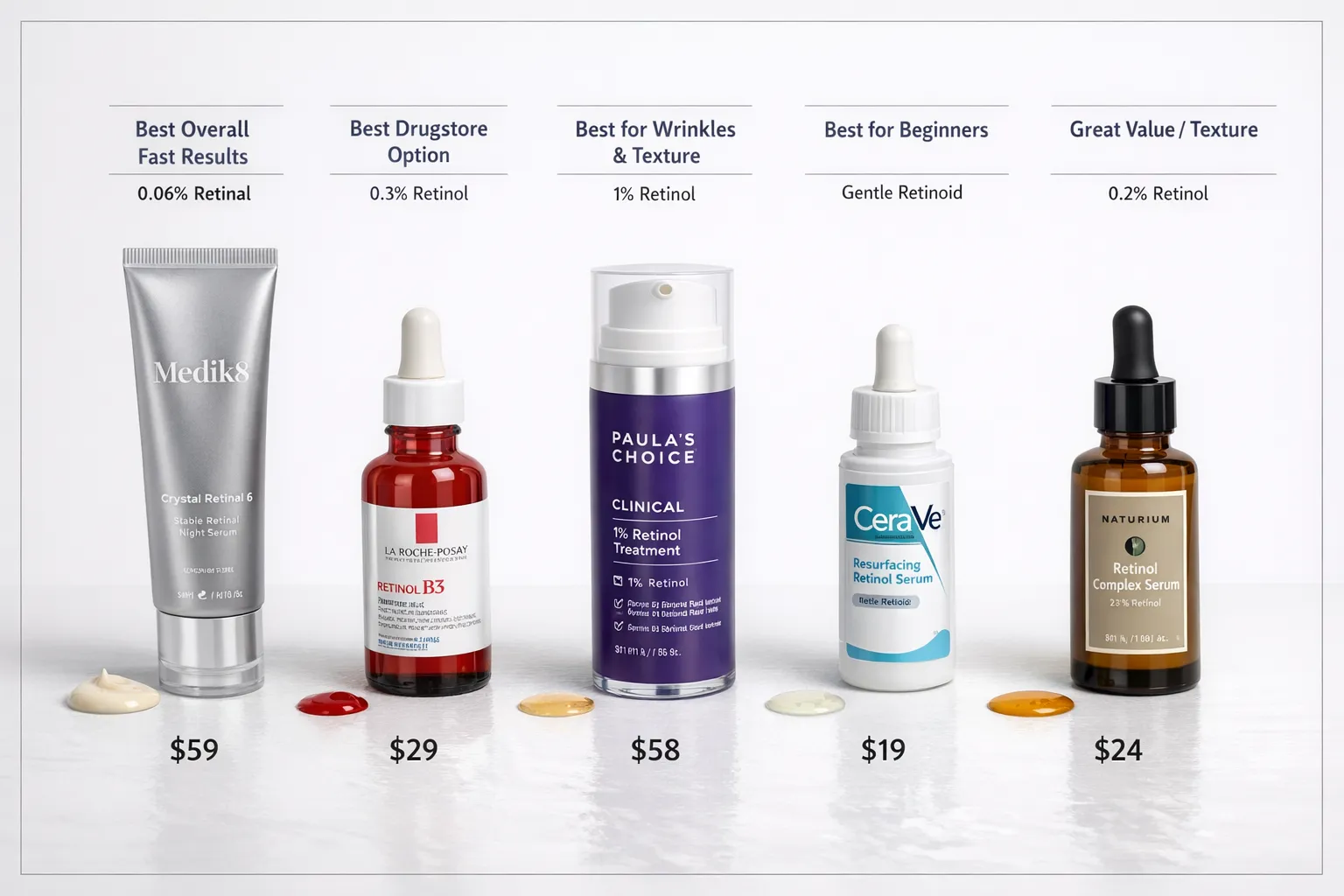
Retinol has become the gold standard in anti-aging skincare, backed by decades of clinical research and endorsed by dermatologists worldwide. Unlike many skincare trends that fade with time, retinol’s efficacy for addressing wrinkles, photodamage, acne, and uneven skin tone remains uncontested. However, with hundreds of formulations available at varying concentrations and price points, choosing the right retinol product can feel overwhelming.
This comprehensive guide cuts through the marketing noise to provide dermatologist-level expertise in a format accessible to both beginners and experienced skincare users. Whether you’re considering your first retinol serum or ready to upgrade to a stronger concentration, this resource covers everything you need to make an informed decision that aligns with your skin’s unique needs.
What Is Retinol? (Science Explained)
Retinol is a form of vitamin A—a fat-soluble nutrient that plays a critical role in skin cell function. When applied topically, retinol penetrates the skin and undergoes a two-step conversion process: first to retinaldehyde (retinal), then to retinoic acid (also called all-trans retinoic acid or ATRA), the biologically active form that triggers cellular changes.
This conversion process is what makes retinol different from prescription-strength retinoids like tretinoin. Because retinol must be converted twice before it becomes active, it works more gently and slowly—but is also better tolerated by most skin types. Dermatologists recognize this advantage as crucial for building long-term tolerance and reducing the irritation that discourages many people from continuing retinoid therapy.
Retinoid Family Hierarchy
Not all retinoids are created equal. Each form of vitamin A requires a different number of conversion steps to become retinoic acid, which determines its strength and speed of action:
Key Insight: The fewer conversion steps required, the stronger the retinoid—and the higher the risk of irritation. This is why dermatologists recommend the “retinoid ladder” approach, starting at the weakest level and gradually ascending as your skin builds tolerance.
How Retinol Works on Skin
Retinol’s effectiveness lies in its ability to influence gene expression and cellular behavior through binding to retinoic acid receptors (RAR and RXR). Here’s what happens at the cellular level:
Cell Turnover Acceleration: Retinol speeds up the natural exfoliation process by increasing the rate at which skin sheds dead cells. This removes the dull, damaged outer layer and exposes fresher, healthier skin beneath. Within 4-6 weeks, users typically notice improved radiance and smoother texture.
Collagen Stimulation: Retinol upregulates genes responsible for collagen production (COL1A1), helping rebuild structural support in the dermis. Clinical studies show measurable increases in collagen and dermal thickness within 8-12 weeks. This is why fine lines visibly soften and skin appears firmer with consistent use.
Anti-Inflammatory Action: Retinol reduces inflammation in the skin, making it effective for acne-prone skin. It decreases levels of inflammatory markers (IL-8, IL-1α) and regulates sebum production, addressing multiple acne pathogenic factors simultaneously.
Melanin Regulation: By accelerating cell turnover and inhibiting tyrosinase (the enzyme that produces melanin), retinol helps fade hyperpigmentation, sun spots, and post-acne marks.
Barrier Support: When used appropriately, retinol actually strengthens the skin barrier by promoting the production of ceramides and hyaluronic acid, improving hydration and protective function.
What Retinol Can & Cannot Do
What Retinol CAN Do:
- Significantly reduce the appearance of fine lines and wrinkles (clinical efficacy proven across 50+ peer-reviewed studies)
- Fade hyperpigmentation and sun spots within 12 weeks
- Improve acne severity by 57-80% within 4-8 weeks
- Refine pore appearance
- Improve overall skin radiance and smoothness
- Build long-term collagen for sustained anti-aging benefits
- Prevent future photodamage when used consistently with SPF
What Retinol CANNOT Do:
- Erase deep wrinkles or severe sagging (these require professional procedures like injectables or microneedling)
- Tighten loose skin caused by significant weight loss or aging (though it can improve elasticity)
- Work overnight (visible results require 4-12 weeks of consistent use)
- Replace sun protection (SPF is essential when using retinol)
- Prevent skin conditions like rosacea or severe eczema from worsening (often contraindicated)
- Provide results if used inconsistently (retinol requires commitment to a regular schedule)
Retinol vs Retinal (Comparison Table)
Verdict: Retinal is stronger and faster-acting but retinol is more accessible and easier to tolerate for most users. Neither is “better”—it depends on your skin’s tolerance level and goals.
Which Retinol Is Right for You?
Choosing the wrong retinol concentration is one of the most common reasons people abandon retinoid therapy. The following framework eliminates guesswork by matching your specific situation to the product that will deliver results with minimal frustration.
Where Are You on the Retinoid Ladder?
Rung 1: Complete Beginner (Never Used Retinoids)
You have not used any form of vitamin A derivatives. Your skin may be reactive, dry, sensitive, or simply unfamiliar with the exfoliating effects of retinoids.
→ Start here: Retinol 0.15%-0.3% or retinal 0.01%-0.05%
Rung 2: Some Retinol Experience (Used OTC Retinol for 3+ Months)
You’ve completed the initial tolerance-building phase and your skin no longer experiences irritation at lower concentrations. You’re ready to deepen results.
→ Progression: Retinol 0.5%-0.6% or retinal 0.1%
Rung 3: Experienced User (Consistent Retinol for 6+ Months)
Your skin has been “retinized”—meaning it has built up tolerance and developed more vitamin A receptors. You see results but want faster or more dramatic improvements.
→ Advancement: Retinol 1% or retinal 0.15%-0.2%
Rung 4: Advanced/Considering Prescription (Plateau Reached)
OTC retinoids no longer provide noticeable improvements. Professional guidance recommended.
→ Consult dermatologist: Prescription tretinoin (0.025%-0.1%), adapalene, or tazarotene
Strength × Skin Type Matrix
| Skin Type | Sensitivity Level | Recommended Retinol Start | Why | Avoid |
|---|---|---|---|---|
| Normal/Combo | Low | 0.3%-0.5% retinol | Can tolerate moderate strength quickly | High concentrations initially |
| Oily/Acne-Prone | Low-Moderate | 0.3%-0.5% retinol or 0.05%-0.1% retinal | Benefits acne-fighting; acne skin often more resilient | Very gentle options underdeliver |
| Dry Skin | Moderate | 0.15%-0.3% retinol | Needs buffer moisturizers; start conservative | Anything without hydrating co-ingredients |
| Sensitive/Reactive | High | 0.15% retinol or 0.01% retinal | Requires time and buffering; consider bakuchiol alternative | All retinol concentrations initially |
| Mature (40+) | Low-Moderate | 0.3%-0.5% retinol | Significant photodamage warrants moderate strength; mature skin often more tolerant | Under-dosing wastes time |
| Rosacea/Eczema | Very High | Consult dermatologist | May be contraindicated; bakuchiol preferred | All retinoids without professional approval |
5 Buying Factors Beyond Percentage
1. Stabilization Technology
Retinol and retinal are notoriously unstable—they degrade when exposed to light, heat, and oxygen. Products using encapsulation, time-release technology, or special packaging preserve potency. Premium products justify higher cost through superior stabilization.
Example: SkinCeuticals Retinol 0.3 uses proprietary stabilization + special opaque packaging. Medik8’s Retinol 3TR employs time-release technology that slowly delivers retinol throughout the night.
2. Delivery System & Formulation Base
A 0.3% retinol in an occlusive cream absorbs differently than a 0.3% retinol in a lightweight serum. Serums and gels typically penetrate faster; creams are more hydrating. Consider your skin’s moisture needs.
Formulation Impact on Strength Ranking:
Serum/Gel > Lotion > Cream > Ointment (in order of absorption speed and effective strength)
3. Co-Ingredients & Irritation Mitigation
The best retinol products pair the active with soothing, hydrating, and barrier-supporting ingredients:
- Niacinamide: Reduces irritation, supports barrier
- Ceramides: Strengthen skin barrier, prevent dryness
- Squalane/oils: Provide hydration and buffer irritation
- Bisabolol (chamomile extract): Soothing, calming
- Hyaluronic acid: Hydration without heaviness
- Peptides: Support collagen, add firmness
Products without these co-ingredients force you to add extra moisturizing steps, increasing application time and reducing adherence.
4. Price-Per-Use vs. Price-Per-Bottle
A $50 retinol serum in 15ml lasts ~4 months (one pump, 5x/week). A $100 retinol serum in 30ml also lasts ~4 months. Cost per month is identical—but packaging and stabilization may differ.
Also consider: Higher prices sometimes reflect better stabilization, which means more of the product actually remains potent by the time you use it.
5. Packaging & Preservation
Retinol degrades rapidly in:
- Clear/transparent bottles (light exposure)
- Jars with open access (air exposure)
- Products stored in humid bathrooms
Best packaging: Opaque bottles with pump dispensers or airless packaging. This protects the formula and ensures you’re using full-strength product throughout the shelf life.
Best Retinol Serums by Category
Best Overall Retinol Serum: Elizabeth Arden Retinol + HPR Ceramide Capsules
Product Overview: Elizabeth Arden’s retinol formula combines 0.3% pure retinol with HPR (hydroxypinacolone retinoate)—a highly bioavailable retinoid ester. The ceramide-based formula prioritizes hydration without sacrificing efficacy, making it suitable for a wide range of skin types.
Retinol/Retinal Concentration: 0.3% retinol + HPR complex
Texture & Skin Type: Lightweight water-cream hybrid; absorbs quickly without heaviness. Suitable for normal, combination, and mature skin. Not ideal for very oily skin (may feel insufficiently matte).
Key Ingredients:
- 0.3% stabilized retinol
- HPR (advanced retinoid ester)
- Ceramides NP, NS, EOP (barrier repair)
- Hyaluronic acid (hydration)
- Squalane (occlusion and barrier support)
Who It’s Best For: First-time retinol users who want proven efficacy without excessive dryness. Dermatologists recommend this as a reliable entry point that produces visible results without the learning curve of other products.
Pros:
- Tested on 358 women in Good Housekeeping trials; ranked #1 overall
- Hydrating formula—minimal dryness even in first weeks
- Plumps skin; users report “bouncy” texture within 4 weeks
- Evens skin tone and fades age spots
- Non-irritating for most users; minimal redness
Cons:
- Premium price point ($80-100 USD)
- Oily skin types may find it slightly heavy
- Results slower than higher-strength retinols (expect 8-12 weeks)
- Not suitable for severe acne (too hydrating, may clog pores)
Price Range: $80-100 USD
How to Use:
- Cleanse and tone skin thoroughly; wait for skin to dry completely
- Apply 1-2 pumps to entire face and neck, avoiding eyes
- Initially use 2-3x per week; build to every other night over 6-8 weeks
- Apply moisturizer 1-2 minutes after (retinol can be used with or without “sandwich method”)
- Always use SPF 30+ the next morning
Realistic Results Timeline:
- Week 1-2: Potential mild dryness, flaking around nose/mouth (normal)
- Week 4: Skin tone evens; radiance noticeably improves; fine lines softening
- Week 8: Visible improvement in wrinkle depth; users report looking more refreshed
- Week 12+: Maximum results; collagen building evident (skin texture, elasticity)
Medical Disclaimer: This product is not tested in pregnancy. Stop use at least one month before attempting to conceive. Not recommended for nursing mothers.
→ CTA: Add to cart and start your retinization journey. Most users see transformative results by week 8. [Link to shop]
Best Retinol for Beginners: SkinCeuticals Retinol 0.3 Refining Night Cream
Product Overview: Dermatologists consistently recommend SkinCeuticals Retinol 0.3 as the gold-standard entry-level retinol. The formula features encapsulated retinol with stabilization technology, bisabolol (a soothing chamomile derivative), and boswellia serrata extract. All ingredients work synergistically to minimize irritation while maximizing efficacy.
Retinol/Retinal Concentration: 0.3% pure retinol (stabilized with proprietary technology)
Texture & Skin Type: Rich night cream that’s not greasy. Excellent for dry, sensitive, and mature skin. Heavier than serums but provides significant hydration.
Key Ingredients:
- 0.3% pure retinol (encapsulated, stabilized)
- Bisabolol (soothing, anti-inflammatory)
- Boswellia serrata extract (anti-inflammatory, skin-conditioning)
- Hyaluronic acid (deep hydration)
- Panthenol (barrier repair)
Who It’s Best For: Beginners who prioritize minimal irritation, people with dry or mature skin, those transitioning from other actives, and anyone with a history of reactive skin.
Pros:
- Specifically formulated for first-time retinol users
- Encapsulated retinol reduces irritation without sacrificing potency
- Rich, creamy texture extremely hydrating
- Minimal flaking/dryness compared to other 0.3% retinols
- Award-winning formula (New Beauty Choice Awards)
- Available in progressive strengths (Retinol 0.5%, 1% for future upgrades)
Cons:
- Expensive ($80-108 USD)
- Heavy formula not ideal for oily/acne-prone skin
- Results slower than higher-concentration retinols
- Jar packaging (can introduce bacteria if not careful)
Price Range: $80-108 USD
How to Use:
- Cleanse face with gentle cleanser; pat (don’t rub) skin dry
- Wait 20 minutes for skin to completely dry
- Apply pea-sized amount to face and neck, avoiding eye area
- First month: 2x per week; month two: increase to 3-4x per week
- Apply lightweight moisturizer over (buffering method recommended initially)
- Never skip SPF 30+ during the day
Realistic Results Timeline:
- Week 1-3: Slight dryness; skin may feel slightly tight. Normal and expected.
- Week 4: Dryness subsides; skin tone evens; pores appear smaller
- Week 6: Fine lines noticeably softer; skin texture refined
- Week 8: Visible wrinkle reduction; skin appears more radiant
- Week 12: Maximum collagen benefits visible; skin appears fuller, more youthful
Medical Disclaimer: Not tested in pregnancy. Avoid during nursing without consulting OB-GYN. Stop use one month before attempting conception.
Who Should NOT Use This Product:
- People with active eczema or psoriasis (without dermatologist approval)
- Those using isotretinoin (Accutane) for acne
- Anyone with severe rosacea (consult dermatologist first)
- Pregnant or nursing women
→ CTA: Start your retinol journey with the gold standard. Order now and receive a free moisturizer sampler. [Link to shop]
Best Retinal Serums: Medik8 Crystal Retinal 3 & Trinny London Overnight Sensation Retinal+
Medik8 Crystal Retinal 3 (0.01% Retinal)
Product Overview: Medik8’s retinal series represents the cutting edge of retinoid stabilization. Crystal Retinal uses patented encapsulation technology that keeps retinal stable—a notoriously difficult feat. The 0.01% strength is specifically designed for retinal beginners; the 0.06% and 0.1% options support progression.
Retinol/Retinal Concentration: 0.01% retinal (stabilized via proprietary crystal technology)
Texture & Skin Type: Lightweight serum; absorbs instantly without residue. Suitable for all skin types, including acne-prone and oily skin.
Key Ingredients:
- 0.01% crystal-stabilized retinal
- Hyaluronic acid (hydration)
- Squalane (barrier support)
- Peptides (firmness, skin support)
- Vitamin E (antioxidant stabilization)
Who It’s Best For: Those who want retinal’s superior results but prefer gentler entry. People with combination/oily skin who find retinol creams too heavy. Advanced users who appreciate the retinal ladder progression.
Pros:
- Retinal works 11x faster than retinol; results visible in 4-6 weeks instead of 8-12
- No irritation with correct application (users report minimal purging)
- Lightweight serum suits all skin types
- Encapsulation ensures product remains potent
- Progressive strength options (3, 6, 10, 20) allow smooth advancement
- Effective for both aging and acne (dual benefit)
Cons:
- Expensive (~$60-80 USD for 15ml)
- Retinal learning curve steeper than retinol
- Not ideal for very dry skin without robust moisturizing routine
- Smaller bottle size than competitor retinols
Price Range: $60-80 USD (15ml)
How to Use:
- Cleanse and completely dry face (moisture dilutes product)
- Apply 2-3 drops to face, neck, and décolletage
- Start with 1-2x per week; gradually increase to nightly after 6 weeks
- Apply lightweight moisturizer immediately after (retinal works better when hydrated)
- Morning: Use vitamin C and SPF (Medik8’s recommended “CSA” strategy)
Realistic Results Timeline:
- Week 1-2: No visible irritation; skin may feel slightly warm/tingly (normal with retinal)
- Week 3-4: Skin tone evens; radiance noticeably improves
- Week 6: Fine lines visibly soften; collagen-building effects evident
- Week 8-12: Maximum results; skin appears plumper, more refined
Medical Disclaimer: Not tested in pregnancy. Discontinue one month before conception. Avoid during breastfeeding.
→ CTA: Experience retinal’s game-changing speed. Start with Crystal Retinal 3 today. [Link to shop]
Trinny London Overnight Sensation Retinal+ Serum (£75)
Product Overview: Trinny London combines retinal with niacinamide and hyaluronic acid in a lightweight, non-greasy formula. The reusable packaging (refill model) appeals to environmentally conscious consumers.
Retinol/Retinal Concentration: Retinal (exact % not publicly disclosed, estimated 0.05%-0.1%)
Texture & Skin Type: Silky serum; absorbs quickly. Suitable for normal, combination, and mature skin.
Key Ingredients:
- Stabilized retinal
- Niacinamide (irritation reduction, barrier support)
- Hyaluronic acid (hydration)
- Plant extracts (anti-inflammatory)
Who It’s Best For: Those who want visible anti-aging results and fine-line softening within weeks. People who prefer convenient, refillable packaging. Anyone seeking retinal without the premium price of Medik8.
Pros:
- Fast-acting retinal formula
- Fine lines and wrinkles visibly reduced within 4 weeks
- Non-irritating for most users; niacinamide soothes
- Eco-friendly refill model
- Excellent for wrinkle-focused goals
Cons:
- Exact retinal concentration not disclosed (transparency issue)
- Premium price similar to Medik8
- Less extensive research backing vs. Medik8 or SkinCeuticals
- Not ideal for very sensitive skin
Price Range: £75 (~$95 USD)
→ CTA: Get visibly smoother skin in 4 weeks. Order Trinny London Retinal+ and join the refill revolution. [Link to shop]
Best for Sensitive Skin: La Roche-Posay Retinol B3 Serum
Product Overview: La Roche-Posay combines pure retinol with niacinamide (vitamin B3)—a proven combination that reduces irritation while supporting the skin barrier. This formula is dermatologist-tested for sensitive skin and recommended by professionals treating rosacea-adjacent conditions.
Retinol/Retinal Concentration: Retinol (0.3% estimated) + 10% niacinamide
Texture & Skin Type: Lightweight serum; absorbs without residue. Formulated specifically for reactive, sensitized, and rosacea-prone skin.
Key Ingredients:
- Pure retinol (concentration optimized for sensitive skin)
- Niacinamide (irritation reduction, pore minimization)
- Thermal water (La Roche-Posay’s mineral complex)
- Glycerin (hydration)
Who It’s Best For: People with rosacea, persistent redness, post-inflammatory erythema, or dermatitis. Those who’ve failed with other retinols due to irritation. Anyone combining retinol with other actives.
Pros:
- Niacinamide significantly reduces retinol-induced irritation
- Dermatologist-tested for sensitive skin
- Gentle efficacy; still produces measurable anti-aging results
- Affordable ($40-60 USD)
- Suitable for combination of acne and rosacea
Cons:
- Lower retinol concentration = slower results
- Niacinamide may be unnecessary for non-sensitive skin
- Results take 10-12 weeks vs. 8 weeks with standard retinol
Price Range: $40-60 USD
→ CTA: Stop reacting to retinol. Try sensitive-skin-formulated La Roche-Posay. Most users tolerate it beautifully. [Link to shop]
Best for Dry Skin: Murad Retinol Youth Renewal Serum
Product Overview: Murad’s retinol serum prioritizes hydration without sacrificing anti-aging efficacy. The formula includes emollient oils, humectants, and a proprietary retinol complex designed to minimize dryness that typically plagues retinol users.
Retinol/Retinal Concentration: Retinol (concentration not disclosed; estimated 0.3%-0.5%)
Texture & Skin Type: Rich yet lightweight serum with a silky finish. Ideal for dry, dehydrated, and mature skin. Non-comedogenic.
Key Ingredients:
- Retinol complex (with enhanced hydration delivery)
- Tremella extract (hydration)
- Shea butter (occlusion and nourishment)
- Hyaluronic acid (depth hydration)
- Peptides (collagen support)
Who It’s Best For: Anyone with chronically dry skin, mature skin with compromised moisture barrier, those experiencing excessive flaking with other retinols, and people in dry climates.
Pros:
- Luxurious texture; skin feels immediately hydrated
- Minimal flaking even in first weeks (common problem solved)
- Softens skin while providing anti-aging benefits
- Non-drying despite retinol content
- Effective for both wrinkles and dehydration lines
Cons:
- Mid-to-premium price ($75-91 USD)
- May be too rich for oily skin types
- Exact retinol concentration proprietary (less transparency)
Price Range: $75-91 USD
→ CTA: Get retinol results without the flaking. Murad’s hydrating formula is game-changing for dry skin. [Link to shop]
Best for Acne-Prone Skin: CeraVe Resurfacing Retinol Serum
Product Overview: CeraVe formulated this retinol specifically for acne-prone skin. It combines retinol with ceramides (barrier repair), niacinamide (sebum regulation), and bacteria-fighting ingredients. The formula addresses multiple acne pathways without over-drying.
Retinol/Retinal Concentration: 0.25% retinol (gentle for acne-sensitive skin)
Texture & Skin Type: Lightweight serum; fast-absorbing. Ideal for oily, acne-prone, combination skin. Non-comedogenic and dermatologist-tested.
Key Ingredients:
- 0.25% retinol (lower concentration for tolerability)
- Ceramides NP, NG, EOP (barrier repair)
- Niacinamide (pore minimization, sebum regulation)
- Centella asiatica (anti-inflammatory, acne-soothing)
- Hyaluronic acid (hydration without heaviness)
Who It’s Best For: People with active acne who want retinol’s skin-clearing benefits. Those previously unsuccessful with acne-fighting actives. Oily skin types seeking balanced hydration.
Pros:
- Lower retinol concentration reduces irritation risk
- Ceramides prevent the over-drying that worsens acne
- Niacinamide regulates sebum; fights acne bacteria
- Budget-friendly ($20-35 USD)
- Dual action: treats active acne and prevents future breakouts
- Reduces inflammatory acne within 4 weeks
Cons:
- Lower concentration = slower anti-aging results
- May not be potent enough for severe, cystic acne
- Better for acne maintenance than acute treatment
Price Range: $20-35 USD (most affordable option)
→ CTA: Clear your skin and treat fine lines. CeraVe’s acne-retinol serum does both—affordably. [Link to shop]
Best for Dark Spots: Youth to the People Retinal and Niacinamide Youth Serum
Product Overview: Youth to the People combines retinal (0.15%, ideal for beginners) with niacinamide for a formula specifically designed to address hyperpigmentation, dark spots, and post-acne marks. Results visible in 4 weeks.
Retinol/Retinal Concentration: 0.15% retinal (beginner-friendly, fast-acting)
Texture & Skin Type: Lightweight, hydrating serum. Suitable for all skin types, especially those concerned with pigmentation.
Key Ingredients:
- 0.15% retinal (hyperpigmentation-targeting)
- Niacinamide (pigment regulation, pore minimization)
- Hyaluronic acid (hydration)
- Centella asiatica (soothing)
Who It’s Best For: Anyone with sun spots, melasma, post-inflammatory hyperpigmentation, or uneven skin tone. Those wanting retinal’s fast results but with gentle entry (0.15% is beginner-level).
Pros:
- Visible brightening within 4 weeks
- Fine lines also soften within 8 weeks
- Gentle 0.15% retinal suitable for beginners
- Addresses both pigmentation and aging (rare dual action)
- Well-tolerated; minimal irritation
Cons:
- Mid-range price ($60-65 USD)
- Not potent enough for severe, stubborn hyperpigmentation
- Retinal may be overkill if only concerned with fine lines (retinol would suffice)
Price Range: $60-65 USD
→ CTA: Fade dark spots and smooth fine lines simultaneously. Youth to the People’s retinal serum delivers in weeks. [Link to shop]
Best Budget Retinol: Neutrogena Retinol Boost Facial Serum
Product Overview: Neutrogena’s Retinol Boost is clinical-strength retinol at an accessible price point. While less fancy than premium options, it delivers proven anti-aging results with minimal irritation through a stabilized retinol formula.
Retinol/Retinal Concentration: Stabilized retinol (concentration estimated 0.1%-0.2%)
Texture & Skin Type: Lightweight serum. Suitable for normal, combination, mature skin. Not recommended for very dry skin without substantial moisturizing.
Key Ingredients:
- Stabilized retinol
- Hyaluronic acid (light hydration)
- Glycerin (humectant)
Who It’s Best For: Budget-conscious consumers, those testing retinol before investing in premium options, people with oily skin wanting lightweight retinol, and retinol beginners on a tight budget.
Pros:
- Budget-friendly ($15-25 USD)
- Clinically proven efficacy
- Stabilized formula; remains potent
- Easy to find (drugstore availability)
- Hydrated skin and reduced age spots within 4-6 weeks
- Good entry point for retinol testing
Cons:
- Lower concentration = slower results than premium retinols
- Minimal co-ingredients; requires separate moisturizer
- Simple formula lacks barrier-supporting ceramides
- May be drying for sensitive skin
Price Range: $15-25 USD (Most affordable)
→ CTA: Get clinical retinol results without the premium price. Neutrogena Retinol Boost proves efficacy isn’t expensive. [Link to shop]
Best Retinol Eye Cream: Murad Retinol Youth Renewal Eye Serum
Product Overview: The eye area is the most delicate facial skin—it has thinner epidermis, fewer oil glands, and requires gentler formulation. Murad’s retinol eye serum delivers retinol’s anti-aging benefits while respecting eye-area sensitivity.
Retinol/Retinal Concentration: Gentle retinol complex (lower than facial serums; concentration not disclosed)
Texture & Skin Type: Lightweight, velvety serum; non-greasy. Safe for all skin types, including sensitive.
Key Ingredients:
- Gentle retinol blend (lower concentration than face serums)
- Hyaluronic acid (hydration around delicate eye area)
- Squalane (barrier protection)
- Peptides (firmness, elasticity)
- Licorice extract (lightening dark circles)
Who It’s Best For: Anyone with crow’s feet, fine lines around eyes, dark circles, or puffiness. Those wanting dedicated eye-area retinol treatment. People uncomfortable applying facial retinol near eyes.
Pros:
- Specifically formulated for eye-area delicacy
- Non-irritating; zero stinging reported
- Softens crow’s feet within 6 weeks
- Lightens dark circles (licorice extract)
- Safe for daily use without the sensitivity of facial retinol
- Never greasy; comfortable for under makeup
Cons:
- Premium price ($75+ USD)
- Results slower than facial retinols (gentler formulation)
- Smaller size (15ml) than facial serums
- Not essential if using facial retinol carefully around eyes
Price Range: $75+ USD
→ CTA: Erase crow’s feet without harsh irritation. Murad’s retinol eye cream targets fine lines beautifully. [Link to shop]
Best Retinol Alternatives (When to Skip Retinol): Bakuchiol
Product Overview: Bakuchiol is a plant-derived compound extracted from the babchi plant. Clinical studies demonstrate it delivers retinol-like anti-aging benefits—smoother skin, reduced wrinkles, improved elasticity—without the irritation, photosensitivity, or pregnancy concerns.
Why Consider Bakuchiol:
Clinical Efficacy: Studies show bakuchiol and retinol produce equivalent improvements in photodamage, wrinkles, and skin texture within 12 weeks. However, bakuchiol users report significantly less stinging, scaling, and dryness.
Mechanism: Unlike retinol (which works through retinoic acid receptors), bakuchiol influences similar anti-aging gene expression patterns through different pathways. It upregulates collagen synthesis, increases FGF7 (fibroblast growth factor), and reduces inflammatory markers—producing retinol-like results via an alternative route.
Unique Advantages Over Retinol:
- No photosensitivity: Can be used morning or night; no mandatory SPF increase
- Pregnancy-safe: No known teratogenic effects; safe to use while trying to conceive or during early pregnancy (consult OB-GYN)
- Better tolerated: Zero irritation reports in comparative trials; suitable for rosacea and eczema
- Superior antioxidant: Bakuchiol has 12,125 AU antioxidant units vs. retinol’s 848 AU—exceptional free-radical protection
- No “retinization” needed: Works effectively immediately; no adaptation period
- Breastfeeding-safe: Can continue use while nursing
Key Ingredients in Quality Bakuchiol Products:
- 1-3% bakuchiol (therapeutic range)
- Hyaluronic acid (hydration)
- Peptides (collagen support)
- Niacinamide (skin barrier enhancement)
Recommended Bakuchiol Products:
- Organic Bakuchiol Serum (affordable, 1% bakuchiol)
- Mediha Bakuchiol Night Cream (richer formula for dry skin)
- ISDIN Bakuchiol Serum (dermatologist brand, trusted efficacy)
Price Range: $25-50 USD (generally more affordable than premium retinols)
Timeline for Results:
- Week 4: Visible improvements in skin tone and radiance
- Week 8: Fine lines begin softening; skin appears smoother
- Week 12: Comparable wrinkle reduction to retinol; collagen-building effects evident
Who Should Choose Bakuchiol Over Retinol:
- Pregnant women or those planning pregnancy
- People with rosacea, eczema, or severe dermatitis
- Those who failed retinol due to intolerable irritation
- Nursing mothers
- Anyone seeking retinol benefits without photosensitivity concern
- People preferring plant-based skincare
→ CTA: Get retinol results without the risks. Bakuchiol delivers anti-aging efficacy beautifully tolerated by sensitive skin. [Link to shop]
How to Use Retinol Correctly
Retinol’s efficacy depends entirely on correct application. Even the best formula produces disappointing results if used improperly. This section eliminates guesswork.
Low & Slow Protocol (The Dermatologist-Recommended Approach)
The “low and slow” method—starting with low concentration, low frequency, and gradually increasing—is the evidence-based standard for retinoid initiation. It minimizes irritation while building tolerance, increasing the likelihood of long-term adherence.
Week 1-2: Foundation (Twice per Week)
- Use on Monday and Thursday nights only
- Application time: 5-7 minutes after cleansing (let skin dry completely)
- Amount: Pea-sized quantity for entire face (smaller than you think)
- Follow with regular moisturizer (buffering method)
- Morning: Standard sunscreen routine
Expected: Possible mild dryness, slight flaking around nose/mouth (this is normal cell turnover, not damage)
Week 3-4: Gradual Increase (3x per Week)
- Add Wednesday night to your routine (Mon/Wed/Fri schedule)
- Same application protocol; same amount
- Moisturizer still follows retinol immediately after
- Continue daily SPF 30+ minimum
Expected: Dryness subsides; skin begins adjusting to increased frequency. Early signs of improvement in skin tone.
Week 5-8: Progressive Integration (4-5x per Week)
- Monday through Friday nights (skip weekends initially)
- Skin is noticeably more tolerant; may skip buffering moisturizer if desired (apply retinol first, wait 5 min, then moisturize)
- SPF remains non-negotiable
- Watch for signs: Skin should look brighter, feel smoother
Expected: Visible improvements in fine lines, radiance, skin texture. Any initial dryness fully resolved.
Week 9+: Maintenance (5-7x per Week / Nightly)
- Use every night or continue 5x per week (depends on your tolerance and preference)
- Some people prefer nightly; others sustain excellent results with 5x/week maintenance
- This is your sustainable rhythm; stick with it
- Continue SPF daily without exception
Important Caveats:
- If irritation occurs at any phase: Reduce frequency to the previous level; wait 2 weeks before advancing again
- If dryness becomes uncomfortable: Skip one application day; use more robust moisturizer; consider buffering method
- If retinoid reaction lasts beyond week 8: Stop use, consult dermatologist; you may need prescription alternative or longer tolerance-building
Application Methods: Buffering vs. Direct
Direct Application (Optimal efficacy, higher irritation risk)
- Cleanse face thoroughly; pat completely dry (wait 5-10 minutes)
- Apply pea-sized retinol directly to face, neck, décolletage
- Wait 20 minutes before applying moisturizer
- This allows maximum retinol penetration; highest efficacy
Best for: Oily, resilient skin; intermediate users who’ve tolerated retinol for 8+ weeks
Buffering Method (Lower efficacy, minimal irritation—especially for starters)
- Cleanse and dry completely
- Apply light moisturizer layer to entire face
- Wait 2-3 minutes (moisturizer absorbs slightly)
- Apply pea-sized retinol over moisturized skin
- Can apply another layer of moisturizer if desired
- Moisturizer “buffers” retinol, reducing irritation by ~30%
Best for: Dry skin, sensitive skin, beginners, those using higher concentrations (0.5%-1%)
Sandwich Method (Least irritating, moderately reduced efficacy)
- Cleanse and dry
- Apply moisturizer layer
- Apply retinol
- Immediately apply moisturizer layer on top
- Creates retinol “sandwich” between moisture layers
Best for: Very sensitive skin, severe initial irritation, dermatitis, rosacea
Evidence-Based Guidance: Buffering reduces irritation with only ~15-20% efficacy decrease. Most dermatologists recommend buffering for beginners; direct application after tolerance is built.
What NOT to Mix With Retinol
Retinol’s strength means certain ingredients cause problems when combined:
| Ingredient | Issue | Solution |
|---|---|---|
| Vitamin C | Reduces efficacy of both; oxidizes retinol | Use vitamin C morning; retinol night |
| AHAs (Glycolic, Lactic Acid) | Excessive exfoliation; barrier damage | Separate nights: AHA Mon/Wed/Fri, retinol Tue/Thu/Sat |
| BHAs (Salicylic Acid) | Over-exfoliation; inflammation | Same separation as AHA |
| Benzoyl Peroxide | Oxidizes retinol; reduces efficacy | Use morning; retinol night |
| Physical Scrubs | Micro-tears + retinol irritation = severe damage | Never combine; discontinue scrubs when using retinol |
| Vitamin A (Retinyl Palmitate) | Redundant; increases irritation | Check other products to avoid duplication |
| Retinoids (Tretinoin, Adapalene) | Excessive strength; severe irritation | Never combine OTC + prescription retinoids |
Safe to Combine (Beneficial):
- Niacinamide: Reduces irritation; supports barrier (ideal pairing)
- Hyaluronic Acid: Hydration without interference
- Ceramides: Barrier support (recommended pairing)
- Azelaic Acid: If used on separate application (can clarify acne-prone skin)
- Peptides: Collagen support (synergistic)
- Squalane/Plant Oils: Barrier protection (excellent pairing)
SPF Rules (Non-Negotiable)
Retinol accelerates cell turnover, exposing newer, more vulnerable skin cells. This increases UV sensitivity—your skin burns faster, experiences more photodamage. SPF protection is not optional; it’s essential to retinol’s success.
Daily Protocol:
- Morning: Cleanser → Toner → Vitamin C (optional) → Lightweight moisturizer → SPF 30+ minimum (reapply every 2 hours)
- Evening: Cleanser → Toner → Retinol → Moisturizer
SPF Selection:
- Minimum: SPF 30 (blocks 97% UVB)
- Recommended: SPF 50 (blocks 98% UVB)
- Formulation: Mineral (zinc oxide, titanium dioxide) preferred for sensitive, retinol-using skin
- Reapplication: Every 2 hours of sun exposure or after swimming
What Happens Without SPF:
- Hyperpigmentation (dark spots reappear)
- Accelerated photoaging (wrinkles worsen)
- Sunburn risk increases significantly
- Retinol’s anti-aging benefits negated
- Potential melasma worsening
Managing Side Effects
Irritation/Redness (Most common, weeks 1-4)
- Mild: Reduce frequency to previous week’s schedule; increase buffering
- Moderate: Alternate days (Mon/Wed/Fri instead of nightly); use sandwich method
- Severe: Pause retinol for 1-2 weeks; resume at lower frequency; consult dermatologist if doesn’t improve
Dryness/Flaking (Expected; usually resolves by week 4)
- Prevention: Robust moisturizer + retinol + additional moisturizer layer
- Treatment: Increase moisturizer ceramides; use hydrating toner before retinol; consider oil (squalane, rosehip)
- Timeline: Usually resolves by week 4-6 as skin adapts
Purging (Acne Breakout) (Temporary; weeks 2-6)
- Why it happens: Retinol accelerates turnover, pushing clogged pores to surface
- Duration: Usually lasts 3-4 weeks; resolves as skin clears
- Management: Continue retinol (stopping allows clogging to resume); use gentle cleanser; avoid acne picking
- When to stop: If purging lasts beyond week 8, consult dermatologist
Burning/Stinging (Sign of over-application or sensitivity)
- Immediate relief: Splash face with cool water; apply soothing moisturizer (niacinamide, centella, chamomile)
- Prevention: Use pea-sized amount; don’t exceed recommended frequency
- Next application: Use buffering method; reduce amount by half
Photosensitivity (Sun sensitivity increase)
- Management: SPF 50+ daily; reapply every 2 hours; avoid midday sun (11am-3pm)
- Duration: Only while using retinol; resolves 2-4 weeks after stopping
- Prevention: The only prevention is consistent daily SPF
Long-Term Strategy (Beyond 12 Weeks)
Once you’ve completed the 12-week introduction and achieved results, the question becomes: How do you maintain progress?
Maintenance Approach 1: Stay at Current Level
- Continue your tolerated strength indefinitely
- Continue nightly (or 5x/week) application
- This provides ongoing collagen support, skin cell refresh, and photoaging prevention
- Many people achieve excellent results and sustain them this way
Maintenance Approach 2: Progressively Advance
- After 12+ weeks at current level, advance to next strength (e.g., 0.3% → 0.5%)
- Repeat the low & slow protocol, but faster (week 4 advancement often works)
- Continue advancing every 3-6 months as desired
- Goal: Reach 1% retinol or 0.1%-0.2% retinal for maximum benefits
Maintenance Approach 3: Cyclical Use
- Alternate: 6 months retinol 0.5% → 3 months break → 6 months retinol 1%
- Prevents tolerance buildup; maintains efficacy
- Less common; some dermatologists recommend, others don’t
Timeline for Visible Results (Standard Retinol 0.3%)
- Month 1: Improved radiance, refined texture
- Month 2: Fine lines noticeably softer
- Month 3: Visible wrinkle reduction; improved skin firmness
- Month 6: Significant anti-aging benefits; skin appears younger
- Month 12+: Sustained collagen support; long-term photoaging prevention evident
Frequently Asked Questions (FAQ)
1. What’s the difference between retinol and retinoid?
Answer: “Retinoid” is the umbrella term for all vitamin A derivatives used in skincare (retinol, retinal, tretinoin, adapalene, etc.). “Retinol” is a specific type of retinoid—one that requires two conversion steps to become the active retinoic acid.
Think of it this way: All retinols are retinoids, but not all retinoids are retinols.
2. How long before I see results from retinol?
Answer: Results timeline depends on your product and concern:
- Radiance/Skin Tone: 2-4 weeks
- Fine Lines: 6-8 weeks
- Wrinkle Depth: 8-12 weeks
- Hyperpigmentation/Dark Spots: 8-12 weeks
- Acne Clarity: 4-8 weeks
- Maximum Collagen Building: 12-24 weeks
Most users see noticeable improvements by week 6-8 if using consistently.
3. Can I use retinol while pregnant?
Answer: Current guidance recommends avoiding topical retinol during pregnancy as a precaution, though evidence suggests risk is low.
Rationale:
- Systemic absorption of topical retinol is much lower than oral retinoids (which are confirmed teratogenic)
- No studies have documented birth defects from topical retinol use in pregnancy
- However, because vitamin A is fat-soluble and can accumulate, regulatory agencies recommend caution
Recommendation from ACOG and EMA: Discontinue retinol at least one month before attempting conception and avoid throughout pregnancy and nursing.
Safer Alternative: Bakuchiol is pregnancy-safe and delivers comparable anti-aging benefits.
4. Will retinol make my skin purge/break out?
Answer: Yes, but this is temporary and normal—not a reason to stop.
Why Purging Happens: Retinol accelerates cell turnover, which pushes accumulated sebum, bacteria, and dead skin cells to the surface. This manifests as temporary acne (usually weeks 2-6).
Key Points:
- Purging is a positive sign your retinol is working
- Duration: Usually 3-4 weeks
- Management: Continue retinol; resist picking; use gentle cleanser
- If purging lasts beyond 8 weeks, consult dermatologist
This is different from irritation: Purging is new breakouts appearing; irritation is redness, burning, and flaking.
5. Is retinol safe for acne-prone skin?
Answer: Yes—retinol is actually one of the best treatments for acne. The American Academy of Dermatology identifies retinoids as “the core of topical therapy for acne.”
Why it works:
- Comedolytic (unplugs pores)
- Anti-inflammatory (reduces redness and swelling)
- Regulates sebum production (reduces oil buildup)
- Prevents future breakouts via cell turnover regulation
- Clinical studies: 57% reduction in lesions within 4 weeks; 80% reduction by 8 weeks
Best retinol for acne: Lower concentrations (0.15%-0.25%) with niacinamide, ceramides, and gentle surfactants to avoid over-drying.
6. Can I layer retinol with other actives?
Answer: Not directly. Mixing retinol with other actives (vitamin C, AHAs, BHAs) risks excessive irritation and reduced efficacy.
Solution: Separation Protocol
- Vitamin C: Use morning
- Retinol: Use night
- AHAs/BHAs: Use Monday/Wednesday/Friday nights
- Retinol: Use Tuesday/Thursday/Saturday nights
- Rest: Sunday for barrier recovery
Safe combinations (can use simultaneously):
- Retinol + Niacinamide
- Retinol + Ceramides
- Retinol + Hyaluronic Acid
- Retinol + Squalane
7. Is prescription retinoid stronger than OTC retinol?
Answer: Yes, significantly. Prescription retinoids (tretinoin, adapalene, tazarotene) are stronger, faster-acting, but riskier for irritation.
Strength Ranking (Lowest to Highest):
- Retinyl Palmitate (weakest)
- Retinol
- Retinal
- Adapalene
- Tretinoin
- Tazarotene (strongest)
When to progress to prescription: After 6+ months of OTC retinol without plateau. Consult dermatologist.
8. What’s the difference between retinol 0.3% and retinol 1%?
Answer: 0.3% is gentler; 1% is stronger and faster-acting.
| Aspect | 0.3% | 1% |
|---|---|---|
| Best for | Beginners, sensitive skin | Experienced users, advanced concerns |
| Results timeline | 8-12 weeks | 6-8 weeks |
| Irritation risk | Low | Moderate |
| Recommended starting point | Yes | No (unless experienced) |
| Final strength for most | Sufficient for many | Aggressive; not everyone needs |
Both are effective; 0.3% is a safer starting point. Not everyone needs 1%.
9. Can retinol be used during the day?
Answer: No. Retinol must be used at night only.
Reasons:
- Retinol increases photosensitivity (sun sensitivity)
- UV exposure degrades retinol, reducing efficacy
- Daytime use increases sunburn and hyperpigmentation risk
- Retinol destabilizes in light and heat
Day Alternative: Retinyl Palmitate (much gentler OTC pro-retinol) or prescription adapalene can be used during day with SPF.
10. What should I do if retinol causes severe irritation?
Answer: Stop immediately and follow this protocol:
Immediate Action (Days 1-2):
- Discontinue retinol use
- Use only gentle cleanser and robust moisturizer (ceramides, hyaluronic acid)
- Apply cool compress if burning
- Avoid all other actives, fragrance, essential oils
- Use SPF 50+ daily
Week 1-2 Recovery:
- Continue basic cleanser + moisturizer routine
- No actives of any kind
- Calming ingredients: Centella asiatica, aloe, niacinamide
- Patience—skin barrier heals in 7-14 days
Week 3 Reassessment:
- If skin recovered: Resume retinol at half-strength, buffered heavily
- If skin not recovered: Consult dermatologist before resuming
Prevention of Future Irritation:
- Start lower concentration (0.15% instead of 0.3%)
- Use buffering method
- Reduce frequency (2x/week vs. daily)
- Pair with niacinamide, ceramides
11. Does retinol cause photosensitivity? Do I need higher SPF?
Answer: Yes, retinol increases sun sensitivity. SPF 30+ minimum recommended; SPF 50+ preferred.
Why Increased Sensitivity:
- Retinol thins the dead skin cell layer (stratum corneum), which normally provides UV protection
- Newer skin exposed to UV is more vulnerable
- Sunburn and hyperpigmentation risk increase significantly
Practical SPF Application:
- Apply SPF 30+ every morning without exception
- Reapply every 2 hours of sun exposure
- Use mineral sunscreen (zinc oxide, titanium dioxide) for sensitive skin
- Avoid midday sun (11am-3pm) when possible
- Wear protective clothing, hats during heavy sun exposure
Important: SPF adherence is what allows retinol’s benefits to compound. Without SPF, retinol’s anti-aging gains are negated by photoaging.
12. Can I use retinol if I have rosacea or eczema?
Answer: Not without dermatologist approval. Retinol is often contraindicated in rosacea and eczema because it increases inflammation and triggers flares.
Why It’s Risky: Retinol accelerates cell turnover → increased inflammation → rosacea/eczema flare
Safer Alternatives:
- Bakuchiol (plant-based, anti-inflammatory, safe for rosacea/eczema)
- Prescription azelaic acid (treats rosacea + hyperpigmentation)
- Consult dermatologist for prescription options
Only Consider Retinol If:
- Your dermatologist explicitly approves
- You use lowest concentration (0.15% retinol)
- You heavily buffer with soothing ingredients
- Your rosacea/eczema is currently controlled (not flaring)
13. What if I’m taking isotretinoin (Accutane) for acne? Can I use OTC retinol?
Answer: No. Never combine isotretinoin with any retinoid, prescription or OTC.
Why: Both are extremely potent vitamin A derivatives. Combining them causes severe toxicity, including:
- Severe skin irritation and damage
- Systemic vitamin A toxicity (headaches, liver damage)
- Potential birth defects (if applicable)
Timeline: Stop all OTC retinol/retinoids at least 6 months before starting isotretinoin. Wait 6+ months after completing isotretinoin before resuming retinol.
14. How much retinol should I apply per use?
Answer: Pea-sized amount for entire face, neck, and décolletage. This is smaller than most people think.
Visual Guide:
- A pea = correct amount
- A rice grain = too small (underestimated potency)
- A dime = far too much (excessive irritation risk)
Application:
- Dispense pea-sized amount onto fingertip
- Dot across forehead, cheeks, nose, chin
- Smooth across entire face and neck
- Do not oversaturate; less is more
Why Less is Better: More retinol ≠ better results. Excess application increases irritation exponentially while improving efficacy minimally.
15. How do I know if retinol has gone bad or lost potency?
Answer: Retinol degrades in light, heat, and air. Signs of degradation:
Visual:
- Color change (clear → yellow/orange)
- Separation or settling in bottle
- Cloudiness or discoloration
Smell:
- Rancid or unpleasant odor (especially if stored in warm bathroom)
Timeline:
- Proper storage (cool, dark, sealed): 12-18 months shelf life
- Typical bathroom storage: 6-9 months before degradation
- Once opened, most retinols remain stable 6-9 months
Best Practice: Store retinol in cool, dark place (bedroom nightstand, not bathroom). Keep cap tightly sealed. Replace annually for optimal potency.
Retinol Alternatives (When to Skip Retinol Entirely)
Bakuchiol: The Retinol Alternative That Works
Who Should Consider Bakuchiol:
- Pregnant women or those planning pregnancy
- Nursing mothers
- People with rosacea, eczema, or severe dermatitis
- Those who experienced intolerable retinol irritation
- Anyone seeking retinol benefits without photosensitivity concerns
- People prioritizing plant-based ingredients
Clinical Evidence:
Bakuchiol and retinol produced equivalent improvements in photodamage, wrinkles, and elasticity, but bakuchiol users experienced significantly less stinging, scaling, and dryness.
Unique Bakuchiol Advantages:
- No photosensitivity (use day or night)
- Superior antioxidant capacity (12x retinol’s antioxidant power)
- Better tolerated by sensitive skin
- Safe during pregnancy and breastfeeding
- Immediate efficacy (no “retinization” needed)
- Anti-inflammatory (benefits rosacea)
Results Timeline:
- Week 4: Visible brightening
- Week 8: Fine lines softening
- Week 12: Comparable anti-aging to retinol
Best Bakuchiol Products:
- Defenage Neck Firming Serum (0.3% bakuchiol + peptides)
- ISDIN K-Oxive Cream (dermatologist brand)
- The Inkey List Bakuchiol Serum (affordable, effective)
Price Range: $25-50 USD (more affordable than premium retinols)
Comparison Table: All Top Retinol Products
| Product | Type | Strength | Best For | Price | Key Feature |
|---|---|---|---|---|---|
| Elizabeth Arden Retinol + HPR | Retinol | 0.3% + HPR | All skin types (overall winner) | $80-100 | Hydrating, clinically proven |
| SkinCeuticals Retinol 0.3 | Retinol | 0.3% | Beginners, dry skin | $80-108 | Gold-standard encapsulation |
| Medik8 Crystal Retinal 3 | Retinal | 0.01% | Retinal beginners, fast results | $60-80 | Patent-stabilized crystal tech |
| Trinny London Retinal+ | Retinal | ~0.1% | Overall results, eco-conscious | £75 ($95) | Refillable packaging |
| La Roche-Posay Retinol B3 | Retinol + Niacinamide | 0.3% | Sensitive, rosacea-prone | $40-60 | Designed for reactive skin |
| Murad Retinol Youth Renewal | Retinol | 0.3%-0.5% est. | Dry skin, mature | $75-91 | Luxurious, hydrating formula |
| CeraVe Resurfacing Retinol | Retinol | 0.25% | Acne-prone, budget-conscious | $20-35 | Affordable, ceramide-based |
| Youth to the People Retinal | Retinal | 0.15% | Dark spots, beginner retinal users | $60-65 | Brightening + anti-aging |
| Neutrogena Retinol Boost | Retinol | ~0.1%-0.2% | Budget-conscious, drugstore access | $15-25 | Most affordable, proven efficacy |
| Murad Retinol Eye Cream | Retinol | Gentle blend | Under-eye fine lines, dark circles | $75+ | Eye-area specific, safe |
| Bakuchiol (Alternative) | Bakuchiol | 1-3% | Pregnancy, sensitive, rosacea | $25-50 | Retinol alternative, pregnancy-safe |
Dermatologist Tips
1. Consistency Trumps Strength
The most common mistake is starting at a high strength, using inconsistently, then abandoning retinol due to irritation. A 0.3% retinol used consistently every night beats 1% retinol used twice weekly.
2. Build Vitamin A Receptors Over Time
Your skin doesn’t have enough vitamin A receptors initially. Consistent retinol use over months builds receptor density, allowing your skin to respond more strongly to the active ingredient. This is why “retinization” (the tolerance-building process) is essential.
3. SPF Is Non-Negotiable
Without daily SPF, retinol’s anti-aging benefits are negated by photoaging. SPF adherence is literally more important than the retinol choice itself.
4. Buffering Reduces Irritation With Only ~15-20% Efficacy Loss
Don’t hesitate to use the buffering or sandwich method, especially initially. The slight efficacy trade-off is worth the dramatically reduced irritation and increased likelihood of long-term adherence.
5. Dark Spots Take Longer Than Wrinkles
Hyperpigmentation is particularly stubborn. Expect 12+ weeks for significant improvement. Patience is required.
6. Transition From OTC to Prescription Carefully
If considering tretinoin after months of OTC retinol, you’ve built tolerance. Transitioning is typically smooth—but start with 0.025% and use carefully for 1-2 weeks before increasing frequency.
7. Not Everyone Needs 1% Retinol
Many people achieve excellent, sustained results at 0.3%-0.5% retinol. Higher concentration doesn’t always equal better results; tolerance and consistency matter more.
8. Signs You’re Ready to Advance Strength
- You’ve used current strength consistently (nightly, 6+ weeks) without irritation
- You’ve built tolerance to the point of nightly use
- Your current strength plateau (you’re no longer seeing improvement)
- Your skin is asking for more (you intuitively feel it can handle stronger)
9. Consider Seasonal Adjustments
Some dermatologists recommend:
- Summer: Pause or reduce to 2-3x/week (extra sun exposure)
- Winter: Nightly (less sun; focused collagen building)
- This is personal preference; not strictly necessary with adequate SPF
10. Retinol Is for Maintenance, Not Just Treatment
Once you achieve results (usually by week 12), don’t stop. Retinol’s benefits only persist with continued use. Stopping returns skin to baseline within weeks.
Retinol Strength Chart (Quick Reference)
| Strength Level | Concentration | Best For | Timeline | Irritation Risk |
|---|---|---|---|---|
| Ultra-Gentle (Starter Retinal) | 0.01%-0.025% | Retinal beginners, sensitive | 6-8 weeks | Very Low |
| Gentle (Beginner Retinol) | 0.15%-0.3% | First-time retinol users | 8-12 weeks | Low |
| Medium (Intermediate) | 0.5%-0.6% | 3+ months consistent users | 6-8 weeks | Low-Moderate |
| Strong (Advanced) | 1% retinol / 0.1% retinal | 6+ months consistent users | 4-6 weeks | Moderate |
| Very Strong (Prescription Retinoid) | Adapalene, Tretinoin, Tazarotene | Plateau reached; professional guidance | 2-4 weeks | Moderate-High |
Final Decision Framework
Use this flowchart to select your ideal retinol:
START HERE: What’s your skin’s retinoid experience?
↓ Never used retinoids → Go to Step 1
↓ Used retinol for 3+ months → Go to Step 2
↓ Used retinol for 6+ months → Go to Step 3
STEP 1: Beginner Selection
- Sensitive skin? → La Roche-Posay Retinol B3 ($40-60)
- Dry skin? → SkinCeuticals Retinol 0.3 ($80-100)
- Oily/acne-prone? → CeraVe Resurfacing Retinol ($20-35)
- Normal skin, want best results? → Elizabeth Arden Retinol + HPR ($80-100)
- Budget-conscious? → Neutrogena Retinol Boost ($15-25)
STEP 2: Intermediate Selection (3-6 months consistent use)
- Want faster results (retinal)? → Medik8 Crystal Retinal 6 ($65-85)
- Want to stay with retinol? → Paula’s Choice 0.5% Retinol ($50-60)
- Dry skin? → Murad Retinol Youth Renewal ($75-91)
STEP 3: Advanced Selection (6+ months consistent use)
- Want maximum OTC potency? → Paula’s Choice 1% Retinol ($60-70) OR Medik8 Retinol 10TR ($70-80)
- Considering prescription? → Consult dermatologist for tretinoin
- Happy with current results? → Stay with your current product (no need to advance)
ALTERNATIVE PATH: Prefer retinol alternative?
- Any skin type, pregnancy-safe → Bakuchiol Serum ($25-50)
- Pregnant/nursing/rosacea → Bakuchiol is your answer
Resources & Further Reading
[Internal Link]: See our Complete Skincare Routine for Anti-Aging guide for how to layer retinol with vitamin C, peptides, and other actives.
[Internal Link]: Learn about Sun Protection and SPF Science to understand why daily sunscreen is non-negotiable with retinol.
[Internal Link]: Explore our Retinoid Alternatives deep dive for detailed bakuchiol, adapalene, and other options.
Authoritative Sources Cited in This Guide
- Journal of Drugs in Dermatology: Clinical studies comparing retinol efficacy vs. tretinoin
- Archives of Dermatology: Retinol photodamage improvement studies
- PubMed Central: Comprehensive retinoid mechanism reviews
- American Academy of Dermatology: Official retinoid acne guidelines
- British Journal of Dermatology: Bakuchiol vs. retinol efficacy comparison