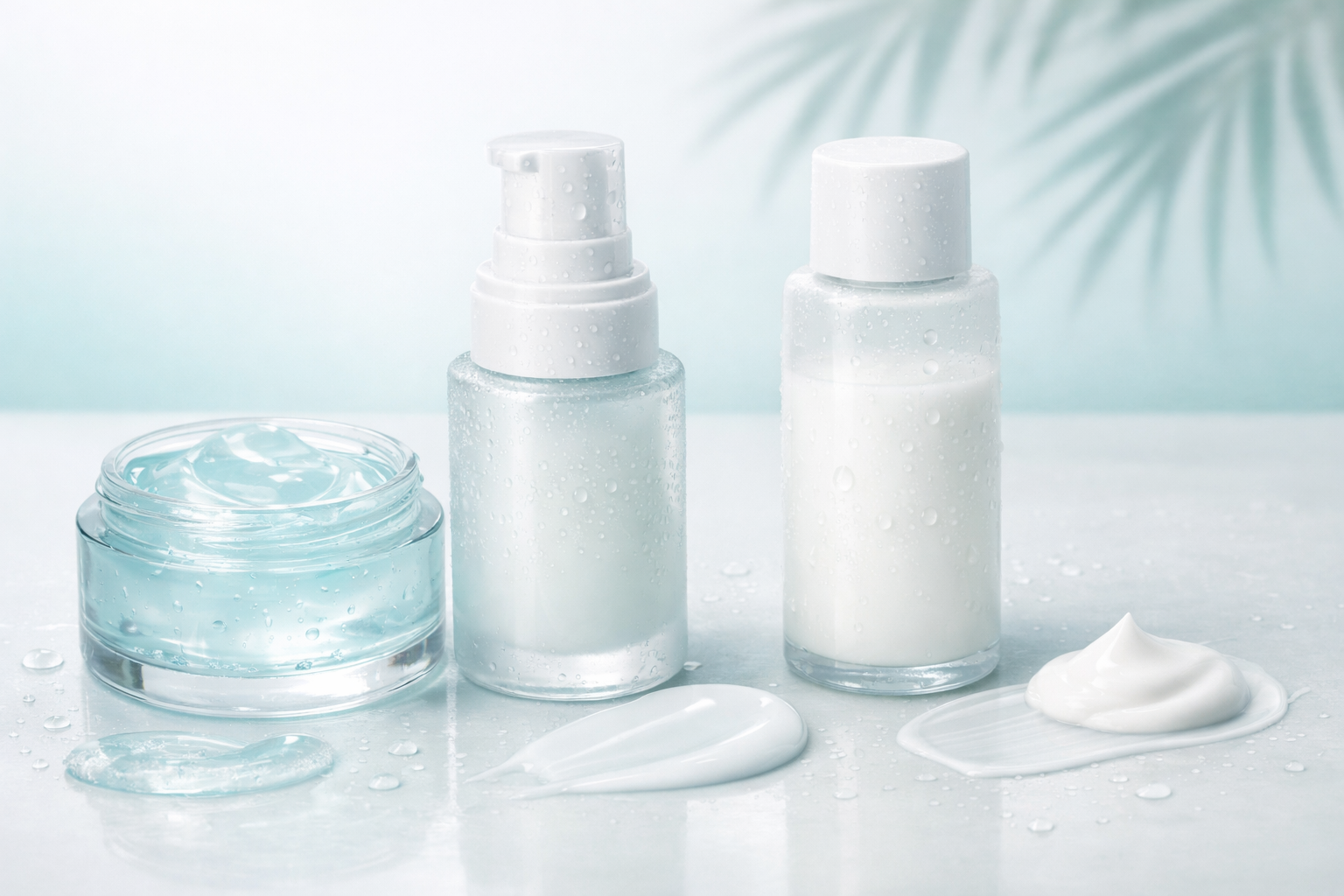
Thai moisturizers represent a fundamentally different approach to facial hydration—one engineered for environments where temperature exceeds 30°C and relative humidity hovers between 70-90% year-round. Unlike Western cream-based systems designed for temperate climates with seasonal variation, Thai formulations prioritize rapid absorption, barrier-light hydration, and texture elegance that performs when sebaceous activity increases and sweat interferes with traditional occlusive moisturization. This guide examines the dermatological rationale, formulation architecture, and practical application of moisturizers specifically adapted for hot, humid conditions.
Best for very oily or sweat-prone skin that feels greasy quickly in humidity. Ultra-light hydration without residue or pore congestion.
Ideal for combination or acne-prone skin needing hydration with light barrier support. Absorbs fast while maintaining breathable comfort.
Great for normal to combination skin in tropical climates. Provides balanced moisture without heaviness during long humid days.
Suitable for sensitive or air-conditioned environments where skin loses moisture despite humidity. Supports barrier without thick occlusion.
Best for acne-prone or Malassezia-sensitive skin in heat and sweat conditions. Hydrates without feeding yeast or clogging pores.
Why Moisturizers Behave Differently in Hot & Humid Climates
Sweat Rate vs. Evaporation Dynamics
In tropical environments, eccrine gland activity increases substantially to facilitate thermoregulation, but high ambient humidity (>70%) prevents efficient evaporation. This creates a paradoxical situation: sweat accumulates on the skin surface rather than evaporating into saturated air, mixing with sebum and creating an emulsion that interferes with moisturizer penetration and performance. Transepidermal water loss (TEWL) measurements in humid conditions reveal that while absolute water loss decreases compared to dry climates, the skin barrier experiences different stress patterns from constant hydration-dehydration cycling as individuals move between outdoor heat and air-conditioned interiors.
Sebum Fluidity and Temperature-Dependent Lipid Behavior
Sebaceous gland output increases approximately 10% for each 1°C rise in skin temperature. In tropical climates where ambient temperatures routinely reach 35-39°C, sebum becomes significantly more fluid, spreading rapidly across facial contours and creating the characteristic “shine” associated with humid-weather skin. This increased sebum fluidity has critical implications for moisturizer selection: traditional occlusive creams designed to prevent TEWL in dry climates now trap this excessive surface lipid layer, creating pore congestion, follicular occlusion, and acne mechanica.
Occlusion Failure in High Humidity
Occlusive moisturizers function by creating a hydrophobic barrier that reduces TEWL by up to 98% in low-humidity environments. However, in humid tropical conditions, this occlusive mechanism becomes counterproductive. Heavy creams trap not only moisture but also heat and sweat beneath their barrier layer, preventing normal thermoregulatory evaporation. The result is a microclimate of elevated temperature and humidity directly against the skin surface—conditions that promote bacterial proliferation, particularly Cutibacterium acnes, and exacerbate inflammatory acne.
Microbiome Shifts and Barrier Adaptation
Skin microbiome composition shifts in response to environmental temperature and humidity. Prolonged exposure to hot, humid conditions alters the relative abundance of lipophilic and hydrophilic bacterial species, while changes in pH and sebum composition affect antimicrobial peptide function. Additionally, tropical residents develop physiological adaptations including altered sweating sensitivity and thermoregulatory efficiency, which influence how the skin responds to topical moisturization strategies.
The Thai Philosophy of Moisturizing: Hydration Without Weight
Water-Gel Dominance in Thai Formulation
Thai skincare philosophy prioritizes what Korean formulation chemists term “moisture without burden”—hydration systems that deliver humectants and water-binding compounds without the heavy emollient and occlusive components characteristic of Western creams. This approach recognizes that in 80%+ humidity environments, the atmosphere itself provides sufficient ambient moisture; the skin’s primary need is for ingredients that optimize water distribution within the stratum corneum rather than prevent evaporative loss.
Lotion Emulsions and Rapid Absorption Architecture
Thai moisturizers typically employ oil-in-water (O/W) emulsions with unusually high water phase percentages (70-85%) compared to Western creams (60-70%). The reduced oil phase minimizes the occlusive effect while maintaining emulsion stability through careful selection of high-HLB emulsifiers (HLB 10-16) and structural agents like cetyl alcohol. This creates formulations that absorb within 30-60 seconds rather than leaving residual film—a critical performance characteristic in environments where makeup application or sunscreen layering must occur immediately afterward.
Barrier-Light Hydration Strategy
Unlike the “barrier repair” paradigm dominant in Western dermatology—which emphasizes ceramide-cholesterol-fatty acid ratios to restore lipid lamellae—Thai formulations adopt a “barrier-permissive” approach. Rather than creating an impermeable lipid barrier, these products support the skin’s natural barrier function while allowing continued transepidermal communication, sebum excretion, and sweat evaporation. This philosophy acknowledges that in tropical environments, complete barrier occlusion interferes with necessary thermoregulation.
Fast Absorption Priority and Anti-Shine Aesthetics
Thai consumers prioritize immediate absorption and matte or semi-matte finish over the “dewy glow” often marketed in temperate climate skincare. This aesthetic preference has functional dermatological basis: in humid environments where natural sebum creates surface shine within 2-3 hours of application, any additional cosmetic shine from moisturizer creates an unacceptable “greasy” appearance and uncomfortable skin feel. Formulations therefore incorporate volatile silicones, alcohol-based delivery systems, or sebum-absorbing powders to ensure rapid penetration without residual tackiness.
Climate Realism vs. Western Cream Tradition
Western moisturizer formulation developed in temperate climates where seasonal variation drives product selection—richer creams for winter dryness, lighter lotions for summer. Thai formulations reject this seasonal paradigm, instead creating year-round products optimized for consistent high heat and humidity. This represents not merely lighter versions of Western creams, but fundamentally different emulsion architectures designed for opposite environmental conditions.
Texture Taxonomy: Types of Thai Moisturizers for Humid Weather
Gel Moisturizers
Pure gel moisturizers represent the lightest end of the Thai texture spectrum—water-based systems thickened with polymeric gels (carbomer, acrylates copolymers) or natural gums (xanthan, gellan) without oil phase. These formulations typically contain 85-95% water plus humectants (glycerin, hyaluronic acid, sodium PCA) and film-forming agents. The absence of lipids creates an exceptionally light feel that absorbs instantaneously, making gels ideal for extremely oily skin or layering under heavier products. However, pure gels provide minimal emollient benefit and may feel insufficient for combination or barrier-compromised skin.
Structure: Aqueous polymer network with entrapped humectants
Skin Feel: Cooling, weightless, non-greasy
Use Case: Oily/acne-prone skin in hot, humid conditions
Gel-Cream Emulsions
Gel-cream textures represent the signature innovation of humid-climate formulation—hybrid systems that combine the light, cooling properties of gels with the emollient benefits of cream emulsions. These products employ low-oil O/W emulsions (8-15% oil phase) thickened with both polymeric gels and traditional emulsifiers, creating what formulators describe as “bouncy” or “pudding-like” texture. The gel matrix provides structure while the dispersed oil droplets deliver skin-conditioning benefits without heaviness. Beauty of Joseon’s Red Bean Water Gel exemplifies this category—feeling “almost creamy yet light” with absorption speed that belies its moisturizing efficacy.
Structure: Low-oil O/W emulsion within polymeric gel matrix
Skin Feel: Bouncy, pudding-like, cooling with slip
Use Case: Combination skin, all-season tropical use
Watery Lotions
Watery lotions employ very low viscosity O/W emulsions (5-12% oil phase) that pour or pump from bottles and have consistency closer to toner than traditional lotion. These formulations prioritize volatile carriers and low-molecular-weight emollients that spread easily and evaporate quickly, leaving only active ingredients and humectants on the skin. The high water content (80-90%) provides immediate cooling sensation, while carefully selected esters (caprylic/capric triglyceride) offer sufficient emolliency without occlusion.
Structure: Ultra-low viscosity O/W emulsion
Skin Feel: Liquid, instantly absorbing, refreshing
Use Case: Morning routine, high heat exposure, makeup base
Emulsion Fluids
In K-beauty and Thai nomenclature, “emulsion” specifically refers to a product category between essence and cream—lighter than Western lotion but more substantive than toner. These formulations (10-20% oil phase) provide more conditioning than watery lotions while maintaining rapid absorption. The texture resembles thin, milky liquid that provides noticeable moisturization without residue, making emulsions popular for nighttime use when slightly more hydration is acceptable.
Structure: Light O/W emulsion with balanced oil/water ratio
Skin Feel: Milky, smooth, absorbs in 60-90 seconds
Use Case: Evening routine, combination skin, air-conditioned environments
Serum-Moisturizers
Serum-moisturizer hybrids blur the line between treatment and hydration—concentrated active ingredient delivery systems (vitamin C, niacinamide, peptides) formulated with sufficient humectants and light emollients to function as standalone moisturizers for oily skin. These products eliminate the need for separate serum and moisturizer steps, reducing total product layers—a significant advantage in humid climates where excessive product buildup exacerbates congestion.
Structure: High-active aqueous or anhydrous system with humectants
Skin Feel: Silky, concentrated, variable based on active ingredients
Use Case: Simplified routine, oily skin, active ingredient focus
Hydro-Essence Hybrids
The newest category in Thai lightweight moisturization, hydro-essences combine the watery consistency of essences with the lasting hydration of moisturizers through high concentrations (20-40%) of multiple-molecular-weight hyaluronic acid plus film-forming polymers. These products feel nearly weightless on application but create an invisible hydration film that continues binding atmospheric moisture to the skin throughout the day —particularly effective in high-humidity environments where ambient water vapor is abundant.
Structure: Aqueous humectant concentrate with film formers
Skin Feel: Water-like initially, becomes slightly tacky, then dry-smooth
Use Case: Maximum hydration with minimal texture, all skin types in humidity
Ingredient Systems Used in Thai Lightweight Moisturizers
Humectants for Humidity Optimization
Humectants function by binding water molecules through hydrogen bonding, but their behavior varies dramatically based on relative humidity. In low humidity (<30%), humectants can paradoxically draw water from deeper skin layers toward the surface, exacerbating dehydration—hence the traditional requirement for occlusive sealing. However, in high humidity (>60%), humectants efficiently draw atmospheric moisture into the stratum corneum without this depleting effect. Thai formulations exploit this by using higher humectant concentrations (15-35%) than typical in Western products (5-15%).
Key humectant systems:
- Hyaluronic acid (multiple molecular weights): 1-1.8 million Da for surface hydration, 10,000-50,000 Da for dermal penetration
- Glycerin: Most cost-effective, 20-40% concentration in gel bases
- Sodium PCA: Natural moisturizing factor (NMF) component, non-sticky even at high concentration
- Panthenol (provitamin B5): Humectant plus anti-inflammatory properties for heat-stressed skin
Film-Forming Agents
Film formers create breathable polymeric networks on the skin surface that maintain hydration without occlusion—critical for allowing continued sweat evaporation and thermoregulation. These water-dissipatable polymers form flexible films upon drying that can reduce TEWL by 20-40% (versus 70-98% for occlusive creams) while permitting vapor permeability.
Common film formers in Thai moisturizers:
- Polyacrylate polymers: Form clear, non-tacky films that dry within seconds
- Sodium hyaluronate: Dual function as humectant and film former
- Natural gums: Galactomannans provide subtle film formation with improved skin feel
Sebum-Compatible Emollients
Tropical-climate moisturizers require emollients that provide slip and conditioning without contributing to surface oiliness or pore congestion. This necessitates selection of non-comedogenic lipids with molecular structures that integrate with sebum rather than layering over it.
Optimal emollient choices:
- Volatile silicones (cyclomethicone, dimethicone copolyol): Provide luxurious skin feel then evaporate, leaving no occlusive residue
- Light esters (caprylic/capric triglyceride, isopropyl palmitate): Low molecular weight, rapid penetration, minimal comedogenicity
- Squalane: Sebum-identical lipid, absorbs quickly without surface buildup
- Meadowfoam seed oil: Unique fatty acid profile provides nourishment without heaviness
Volatile Carriers and Sensory Modifiers
Achieving the “light-yet-hydrating” sensation characteristic of Thai moisturizers requires sophisticated sensory engineering. Volatile carriers provide initial spreadability and cooling sensation, then evaporate to eliminate residual tackiness.
Volatile systems:
- Alcohol-based (SD alcohol 40, alcohol denat): Creates refreshing sensation, accelerates absorption
- Volatile silicones: Luxury feel without lasting occlusion
- Ester blends: Semi-volatile lipids that penetrate rather than evaporate
Anti-Shine Powders and Sebum Absorbers
To address the rapid return of surface shine in humid climates (typically 2-3 hours post-application), some Thai moisturizers incorporate microscopic powders that absorb excess sebum throughout the day.
Sebum-absorbing technologies:
- Silica microspheres: Absorb up to 3x their weight in sebum
- Rice starch: Traditional Thai ingredient, provides natural mattifying effect
- Kaolin/bentonite clays: Ultra-fine particles suspended in emulsion
Soothing and Barrier-Support Actives
Heat-stressed skin in tropical climates experiences chronic low-grade inflammation from UV exposure, temperature elevation, and constant sebaceous activity. Thai formulations commonly include cooling and anti-inflammatory actives.
Key soothing ingredients:
- Green tea extracts: Polyphenol antioxidants reduce inflammation and regulate sebum
- Centella asiatica: Traditional Thai botanical, promotes barrier repair without occlusion
- Aloe vera: Cooling sensation, anti-inflammatory, light humectant properties
- Niacinamide: Regulates sebum production, strengthens barrier, reduces inflammation
How to Choose a Moisturizer in Humid Climate: Decision Framework
Oily Skin Selection Criteria
Oily skin in humid tropical climates experiences sebum production rates 40-60% above baseline, with visible shine returning within 2-3 hours of cleansing. Moisturizer selection must prioritize oil-free formulations that provide adequate hydration without adding lipids.
Optimal choices:
- Pure gel moisturizers with 0% oil phase for extreme oiliness
- Serum-moisturizer hybrids containing niacinamide (4-5%) to regulate sebum production
- Products with sebum-absorbing powders for extended matte finish
Avoid: Any cream with >10% oil phase, occlusives (petrolatum, mineral oil), butter-based formulations
Acne-Prone Skin Considerations
Acne-prone skin in humidity faces triple threat: increased sebum fluidity, sweat-induced pore occlusion, and bacterial proliferation in warm, moist conditions. Moisturizer selection must avoid comedogenic ingredients while supporting barrier function to prevent the compensatory sebum overproduction that occurs with overly aggressive acne treatment.
Critical requirements:
- Non-comedogenic certification
- Anti-inflammatory actives (niacinamide, centella, green tea)
- Salicylic acid (0.5-2%) for pore-clearing if tolerated
- Gel or gel-cream texture that doesn’t trap sweat
Avoid: Heavy occlusives that trap bacteria, excessive oils that feed C. acnes
Combination Skin Balance
Combination skin presents the greatest formulation challenge in tropical climates—the T-zone produces excess sebum (requiring gel-like textures) while cheeks may experience dehydration from air conditioning exposure (requiring more emollience).
Optimal approach:
- Gel-cream emulsions that provide dual-phase hydration
- Multi-zonal application: lighter gel on T-zone, emulsion on cheeks
- Hydro-essence products that adjust to local skin needs
Dehydrated vs. Dry Skin in Tropics
Critical distinction: dehydrated skin lacks water, dry skin lacks lipids. Tropical climates rarely cause true lipid-dry skin; apparent “dryness” is usually dehydration from air conditioning, resulting in the paradox of oily-yet-dehydrated skin.
For dehydrated oily skin:
- High-humectant gel or gel-cream (no additional oils needed)
- Multiple-molecular-weight hyaluronic acid to address different epidermal layers
- Avoid adding oils, which worsen surface congestion
For true dry skin (rare in tropics):
- Light emulsion fluids with ceramides and cholesterol
- Moderate oil phase (15-20%) without heavy occlusives
Sensitive and Reactive Skin
Heat and humidity increase skin reactivity through elevated blood flow, mast cell activation, and disrupted barrier function from constant thermal stress. Sensitive skin in tropical climates requires minimalist formulations avoiding common irritants.
Selection criteria:
- Fragrance-free, essential oil-free formulations
- Minimal ingredient lists (<15 ingredients)
- Proven barrier-support ingredients (ceramides, cholesterol, fatty acids) at physiological ratios
- Cooling, anti-inflammatory actives (centella, panthenol, allantoin)
Barrier-Damaged Skin Recovery
Barrier damage in tropical climates most commonly results from over-exfoliation attempting to control oiliness, or from retinoid/active ingredient use. Recovery requires temporarily increasing occlusion despite climate.
Repair protocol:
- Short-term use (2-4 weeks) of light emulsion with barrier lipids
- Ceramide-dominant formulations (3-5% ceramide complex)
- Reduce active ingredients temporarily
- Transition back to gel-cream once barrier integrity restored
Moisturizing Routines in Tropical Thailand
Minimal Layer Philosophy
Thai skincare routines in humid weather prioritize efficiency over the elaborate 10+ step routines sometimes associated with K-beauty. Excessive product layering creates several problems in tropical climates: heat and sweat trapped beneath product layers, increased pore congestion from multiple occlusive films, and product pilling when too many incompatible textures interact. Most Thai users employ 3-5 steps maximum during high heat exposure.
Strategic Gel Layering
When multiple hydration products are used, Thai approach sequences them from thinnest (most watery) to thickest, allowing each layer to absorb completely before applying the next. This prevents the product buildup and surface film that occur when thicker products are applied first. Typical sequence: watery essence → lightweight serum → gel or gel-cream moisturizer.
Day vs. Night Texture Differences
Daytime routines in Thailand heavily favor the lightest textures—gels and watery lotions that absorb instantly and create matte base for sunscreen and makeup. Nighttime routines permit slightly richer textures (gel-creams, light emulsions) since there’s no concern about shine, makeup application, or immediate sun exposure. However, even nighttime products remain far lighter than temperate-climate night creams, as bedroom temperatures often remain 26-28°C even with air conditioning.
Air Conditioning vs. Outdoor Adaptation
The dramatic microclimate shift between outdoor humidity (75-90% RH) and air-conditioned interiors (40-50% RH, 22-24°C) requires adaptive moisturizing strategy. Air conditioning removes moisture from both air and skin surface, potentially increasing TEWL and creating temporary dehydration. Many Thai users apply lighter gel outdoors but keep emulsion-texture products at office for midday reapplication in AC environment.
Adaptation strategies:
- Outdoor/commute: Oil-free gel or gel-cream
- Air-conditioned office: Light emulsion with added humectants
- Midday refresh: Hydrating mist or essence to counteract AC dryness
Sweat-Reset Skincare Practice
Unique to humid tropical climates is the practice of midday cleansing and product reapplication after sweat accumulation. Rather than allowing sweat, sebum, and pollution to accumulate for 12+ hours, Thai skincare users often perform abbreviated cleansing (micellar water or gentle cleanser) followed by fresh moisturizer and sunscreen application during lunch break. This prevents the mixture of morning products with afternoon sweat from clogging pores.
Sunscreen Interaction Considerations
In tropical climates, sunscreen is daily essential and must layer compatibly with moisturizer. Heavy moisturizers under sunscreen create excessive product buildup, pilling, and greasy appearance. Thai approach typically uses:
- Lightweight gel moisturizer OR moisturizing serum
- Wait 1-2 minutes for complete absorption
- Apply gel-based or fluid sunscreen that doubles as additional lightweight hydration
Many modern Thai sunscreens incorporate sufficient humectants and light emollients to function as moisturizer for oily skin, eliminating need for separate moisturizer layer.
Sample Routine: Oily Skin, Bangkok Climate
Morning (outdoor commute anticipated):
- Gentle water-based cleanser
- Vitamin C or niacinamide serum (optional)
- Oil-free gel moisturizer with silica for oil control
- Lightweight gel sunscreen SPF 50+ PA++++
Midday refresh (air-conditioned office):
- Blotting paper to remove excess sebum (no cleansing)
- Hydrating essence or mist if skin feels tight from AC
- Sunscreen reapplication
Evening (home, air conditioning):
- Oil-based cleanser (if wearing sunscreen/makeup)
- Water-based cleanser
- Treatment products (retinoid, acids if using)
- Gel-cream moisturizer—slightly richer than morning
Sample Routine: Acne-Prone, Humid Climate
Morning:
- Salicylic acid or gentle foaming cleanser
- Niacinamide serum (4-5% concentration) for sebum regulation
- Lightweight gel moisturizer with centella for anti-inflammatory effect
- Non-comedogenic gel sunscreen
Evening:
- Double cleanse (oil cleanser + foam cleanser)
- Adapalene or tretinoin (if prescribed)—wait 20 minutes
- Calming gel-cream with panthenol and green tea
- Spot treatment on active lesions
Sample Routine: Dehydrated Combination Skin, Tropical Climate
Morning:
- Gentle milk or gel cleanser
- Hydrating toner with multiple-weight hyaluronic acid
- Watery essence with glycerin and sodium PCA
- Gel-cream moisturizer applied more liberally on cheeks, sparingly on T-zone
- Hybrid sunscreen-moisturizer product
Evening (with air conditioning exposure):
- Cleansing oil or balm
- Gentle foaming cleanser
- Hydrating essence
- Hyaluronic acid serum
- Light emulsion moisturizer—slightly richer than morning to counteract AC dehydration
Sample Routine: Sensitive Skin, Heat-Reactive, Thailand
Morning (minimal products to reduce reactivity):
- Micellar water or extremely gentle cleanser
- Centella or panthenol essence for barrier support
- Fragrance-free gel-cream with ceramides
- Mineral sunscreen (zinc/titanium) less irritating than chemical filters
Evening:
- Gentle cleansing milk
- Ceramide-rich toner
- Calming gel-cream with minimal ingredient list
- Aloe vera gel on any inflamed areas
Why Heavy Creams Fail in Humidity
Occlusion Trapping Sweat and Heat
Traditional rich creams function by creating hydrophobic barrier that prevents water evaporation from skin surface. In low-humidity environments (<50% RH), this mechanism effectively reduces TEWL and maintains stratum corneum hydration. However, in high-humidity tropical conditions (>70% RH), this same occlusive barrier traps not only moisture but also heat and sweat. The skin attempts to thermoregulate through sweating, but the occlusive cream prevents sweat evaporation, creating a microclimate of elevated temperature and 100% humidity directly against the skin surface.
This trapped moisture environment causes several cascading problems: maceration of the stratum corneum (similar to prolonged water immersion), disruption of the skin’s antimicrobial defenses, and creation of ideal conditions for bacterial and fungal proliferation. Users describe the sensation as “suffocating,” “unable to breathe,” or “my skin is sweating underneath the cream”.
Pore Congestion and Follicular Occlusion
Sebum production increases 10% per 1°C temperature rise. In tropical climates with skin temperatures often reaching 34-36°C (versus 28-30°C in temperate climates), sebaceous glands produce 40-60% more lipid than baseline. When heavy cream adds additional occlusive lipids (petrolatum, mineral oil, thick butters) to already elevated sebum output, the result is overwhelming surface lipid accumulation.
This excessive surface lipid mixes with sweat, dead corneocytes, and environmental pollution to form thick, paste-like substance that mechanically blocks pilosebaceous openings. The resulting follicular occlusion manifests as comedones (blackheads/whiteheads), inflammatory papules, and the exacerbation of underlying acne vulgaris. Dermatological literature terms this “acne cosmetica” when caused by inappropriate cosmetic product selection for climate.
Shine Amplification and Cosmetic Unacceptability
Heavy creams leave visible film on skin surface—in temperate climates, this creates desirable “dewy glow” aesthetic. However, in humid tropical conditions where endogenous sebum creates natural surface shine within 2-3 hours, added cosmetic shine from cream becomes unacceptable. The combination of cream residue plus heat-induced sebum fluidity creates what users describe as “greasy,” “oily slick,” or “melting makeup” appearance.
This isn’t merely cosmetic concern—excessive surface lipid impairs sunscreen adhesion and effectiveness, causes makeup to separate and slide, and creates psychological discomfort that leads users to over-cleanse or abandon moisturizing entirely. The latter response triggers compensatory sebum overproduction, worsening the original problem.
Microbiome Dysbiosis
Skin microbiome composition depends heavily on local environmental conditions including temperature, pH, lipid availability, and humidity. Heavy occlusive creams create microclimate with altered temperature (+2-3°C), humidity (near 100%), and abundant lipid substrate. These conditions favor lipophilic bacteria, particularly Cutibacterium acnes (formerly Propionibacterium acnes), which metabolizes sebum and cream lipids into pro-inflammatory free fatty acids.
Studies of “maskne” (mask-induced acne during COVID-19 pandemic) demonstrated that occlusive barriers in hot, humid conditions cause rapid microbiome shifts toward inflammatory bacterial species within hours. Similar dysbiosis occurs under heavy cream in tropical climate, though developing more gradually over days to weeks of use.
Perceived Greasiness vs. Actual Hydration
Critical misconception: “rich/greasy feeling = well-moisturized skin”. In reality, heavy cream’s greasy feel indicates surface occlusion, not necessarily improved stratum corneum hydration. In humid environments where ambient moisture is abundant, skin’s primary need is for humectants that optimize water distribution within the epidermis, not occlusives that prevent evaporative loss.
Heavy creams provide occlusion without corresponding humectant concentration—appropriate for low-humidity environments where preventing TEWL is critical, but inefficient in high humidity where atmospheric moisture is freely available. Users often report that lightweight gel moisturizers “feel like nothing” initially but provide superior actual hydration compared to heavy creams that “feel moisturizing” but cause congestion.
The Occlusion-Humidity Inverse Relationship
When You Actually Need Richer Moisturizers in Thailand
Air-Conditioned Environment Adaptation
Prolonged air conditioning exposure creates microclimate paradox within tropical countries—outdoor humidity may be 80-90%, but indoor AC environments drop to 40-50% RH at 22-24°C. This dramatic shift increases TEWL and can cause genuine dehydration, particularly in office workers spending 8-10 hours daily in climate-controlled environments.
Indications for richer moisturizer in AC:
- Visible flaking or tightness after several hours in air conditioning
- Skin feels “parched” despite outdoor humidity
- Increased sensitivity or barrier disruption from AC exposure
Appropriate choice: Light emulsion (15-20% oil phase) with ceramides and humectants—richer than gel but far lighter than temperate-climate winter cream.
Barrier Damage from Over-Treatment
Aggressive acne treatment, excessive exfoliation attempting to control humidity-induced oiliness, or overzealous use of actives (retinoids, AHAs/BHAs, vitamin C) commonly damages barrier function in tropical climates. Compromised barrier manifests as increased TEWL, stinging/burning with product application, persistent redness, and paradoxical increase in both oiliness and dehydration.
Recovery protocol requires temporary increase in occlusion:
- Ceramide-dominant emulsion (3-5% ceramide complex plus cholesterol and fatty acids at 3:1:1 ratio)
- Reduce or eliminate active ingredients during 2-4 week repair phase
- Return to lighter gel-cream textures once barrier integrity restored
Travel Adaptation: Thailand to Temperate Climates
Thai residents traveling to temperate or cold climates experience sudden exposure to low humidity (winter: 20-40% RH) and dramatically reduced temperatures. Skin accustomed to constant high humidity and minimal occlusive moisturizing will experience severe dehydration in these conditions.
Adaptation strategy:
- Gradually introduce richer textures 1-2 weeks before travel
- Bring light cream or emulsion (20-30% oil phase) for destination use
- Layer: humectant serum + light emulsion + targeted occlusive on dry areas
- Re-adapt to gel textures over 1-2 weeks upon return to Thailand
Retinoid and Active Ingredient Support
Prescription retinoids (tretinoin, adapalene) and strong exfoliating acids cause controlled barrier disruption that requires moisturizing support. In temperate climates, dermatologists typically recommend heavy creams to buffer retinoid irritation. However, in tropical Thailand, heavy occlusion over retinoid-treated skin risks trapping irritation and causing severe inflammation.
Thai-climate retinoid protocol:
- Apply retinoid to completely dry skin
- Wait 20-30 minutes for penetration
- Apply barrier-supporting gel-cream or light emulsion (not heavy cream)
- For severe dryness, add targeted occlusive (small amount petrolatum or ceramide ointment) only to flaking areas, not entire face
Post-Procedure Barrier Recovery
Dermatological procedures common in Thai aesthetic clinics—laser treatments, chemical peels, microneedling—intentionally damage the barrier to trigger remodeling. Post-procedure skin requires temporary occlusion to prevent infection and optimize healing, even in humid climate.
Post-procedure moisturizing (follow clinic-specific protocol):
- Days 0-3: Barrier repair ointment or rich emulsion as directed
- Days 4-7: Gentle emulsion with ceramides and panthenol
- Week 2+: Gradual return to normal gel or gel-cream texture
Eczema and Atopic Dermatitis
Atopic dermatitis requires consistent barrier support regardless of climate, though the specific formulation should still acknowledge tropical conditions. Eczema patients in Thailand need moisturizers richer than typical humid-climate products but lighter than temperate-climate eczema creams.
Thai-adapted eczema moisturizing:
- Fragrance-free emulsion with physiological lipid ratios (ceramides:cholesterol:fatty acids 3:1:1)
- Apply to damp skin immediately post-bathing
- Reapply 2-3x daily to maintain barrier support
- During flares, may need temporary use of richer cream on affected areas only
Thai vs Western Moisturizers in Humid Climate
Texture Architecture Comparison
Western moisturizers developed for temperate climates employ emulsion systems with 25-40% oil phase, designed to create substantial occlusive barrier. These formulations prioritize prevention of TEWL through hydrophobic lipid layers (petrolatum, mineral oil, thick butters) appropriate for 30-50% relative humidity environments.
Thai moisturizers invert this ratio, typically using 5-15% oil phase focused on skin conditioning rather than occlusion. The high water phase (75-90%) delivers humectants that leverage ambient humidity rather than fighting evaporation. Structural differences include lighter emulsifiers (higher HLB values 10-16 vs 8-12), polymeric gel matrices for texture without weight, and volatile carriers that provide application elegance then disappear.
Absorption Rate and Residue
Western creams absorb over 2-5 minutes, leaving intentional occlusive film that users perceive as “moisturized” feeling. This residue provides barrier protection in dry climates but becomes problematic in humidity.
Thai products absorb in 30-90 seconds with minimal to no residual feel. The rapid penetration results from volatile solvents, low-viscosity emulsions, and absence of heavy occlusive ingredients. Initial user reaction is often “this feels like nothing”—but actual stratum corneum hydration measurements show equivalent or superior performance compared to heavy creams in high-humidity environments.
Occlusion vs Permeability Philosophy
Western dermatology emphasizes “barrier repair” through occlusive lipid replacement—recreating the brick-and-mortar structure of stratum corneum lipid lamellae. This approach succeeds in temperate climates where external humidity is low and preventing evaporative loss is critical.
Thai formulation philosophy embraces “barrier permeability”—supporting barrier function while allowing continued thermoregulation, sebum excretion, and sweat evaporation. This acknowledges that complete occlusion in tropical climates interferes with necessary physiological processes and creates more problems than it solves.
Climate-Humidity Suitability
Western moisturizers perform optimally in their design environment: temperate regions with 30-60% RH, seasonal variation, and significant indoor heating (winter) that creates <30% indoor RH. Applied in tropical Thailand, these same formulations trap heat, cause pore congestion, amplify shine, and create uncomfortable “suffocating” sensation.
Thai moisturizers excel in consistent high heat (28-38°C) and high humidity (70-95% RH). However, they may provide insufficient occlusion in genuinely dry environments—Thai users traveling to temperate winter climates often experience dehydration using their usual products.
Skin Feel and Finish Aesthetics
Western “dewy glow” aesthetic—popularized through advertising showing models with visible shine—works in moderate climates where natural sebum production is controlled. This look becomes cosmetically unacceptable in tropical conditions where endogenous sebum creates shine without added product.
Thai aesthetic prioritizes matte to semi-matte finish, “my skin but better” appearance rather than visible product. Formulations incorporate sebum-absorbing powders and volatile ingredients specifically to avoid added shine. The goal is hydrated skin that looks natural, not “moisturized-looking” skin with visible product glow.
Seasonal vs. Year-Round Design
Western skincare assumes seasonal rotation—light lotions for summer, rich creams for winter. Product development targets temperate climate seasonal variation (summer: 70% RH, 25°C vs winter: 30% RH, 5°C).
Thai formulations design for climate consistency—Bangkok experiences 28-35°C and 70-90% RH year-round with minimal seasonal variation. Rather than seasonal product switching, Thai users adjust for microclimate transitions (outdoor vs AC) using different textures within the same lightweight category.
Common Myths About Moisturizers in Humid Weather
Myth: Moisturizer Unnecessary in High Humidity
The misconception: Humid air contains abundant moisture, so topical moisturizer is redundant; skin absorbs water directly from atmosphere.
The reality: While high ambient humidity does reduce TEWL and provides some passive hydration benefit, atmospheric moisture cannot penetrate stratum corneum without carrier systems. Skin’s outermost layer (stratum corneum) consists of dead, keratinized cells embedded in lipid matrix—this structure prevents uncontrolled water absorption that would cause tissue swelling.
Moisturizers in humid climates serve different function than in dry climates: rather than preventing evaporative loss through occlusion, they provide humectants that actively bind atmospheric moisture and transport it into stratum corneum. Without these water-binding ingredients, skin in high humidity may feel temporarily “plump” from surface moisture but lacks actual hydration at cellular level.
Additionally, air conditioning exposure—ubiquitous in tropical countries—creates indoor environments with 40-50% RH, negating the outdoor humidity benefit. The transition between outdoor humidity and indoor AC causes hydration fluctuations that moisturizer helps stabilize.
Myth: Gel Moisturizers Provide Insufficient Hydration
The misconception: Gels contain mostly water and provide only superficial, temporary hydration; “real” moisturization requires cream with substantial oil content.
The reality: Hydration efficacy depends on humectant concentration and water-binding capacity, not oil content. Well-formulated gel moisturizers with 20-35% humectants (glycerin, hyaluronic acid, sodium PCA) provide equivalent or superior stratum corneum hydration compared to oil-rich creams in humid environments.
Corneometry studies (electrical capacitance measurement of stratum corneum water content) demonstrate that high-humectant gels increase skin hydration 40-60% from baseline, comparable to traditional creams. The perception of “insufficient” hydration from gels stems from absence of occlusive residue—users mistake the lack of greasy film for lack of moisturizing effect.
In high-humidity conditions (>60% RH), humectants efficiently draw atmospheric moisture into skin without requiring occlusive seal. Gels therefore provide complete moisturization appropriate for climate without the liabilities of occlusive creams.
Myth: Oily Skin Doesn’t Need Moisturizer
The misconception: Oily skin produces excess sebum, providing natural moisturization; adding topical moisturizer worsens oiliness.
The reality: Critical distinction between “oily” (excess sebum) and “hydrated” (adequate water content). Oily skin frequently suffers from dehydration—high surface lipid content but insufficient water in stratum corneum. This “oily yet dehydrated” state is particularly common in tropical climates where heat increases sebum fluidity while AC exposure depletes water content.
Skipping moisturizer on oily skin triggers compensatory sebum overproduction as skin attempts to prevent perceived dehydration. The solution is not eliminating moisturizer but selecting appropriate texture: oil-free gel or gel-cream that provides humectant hydration without adding lipids.
Dermatological studies confirm that appropriate moisturizer use in oily/acne-prone skin improves barrier function, reduces inflammatory cytokines, and can actually decrease sebum production over time through restoration of skin homeostasis.
Myth: Sweat Hydrates Skin
The misconception: Profuse sweating in humid climates provides constant moisture to skin surface, contributing to hydration.
The reality: Sweat (primarily water plus electrolytes, urea, lactate) cannot penetrate stratum corneum to provide hydration. The lipophilic barrier of stratum corneum specifically prevents uncontrolled water absorption. Surface sweat creates