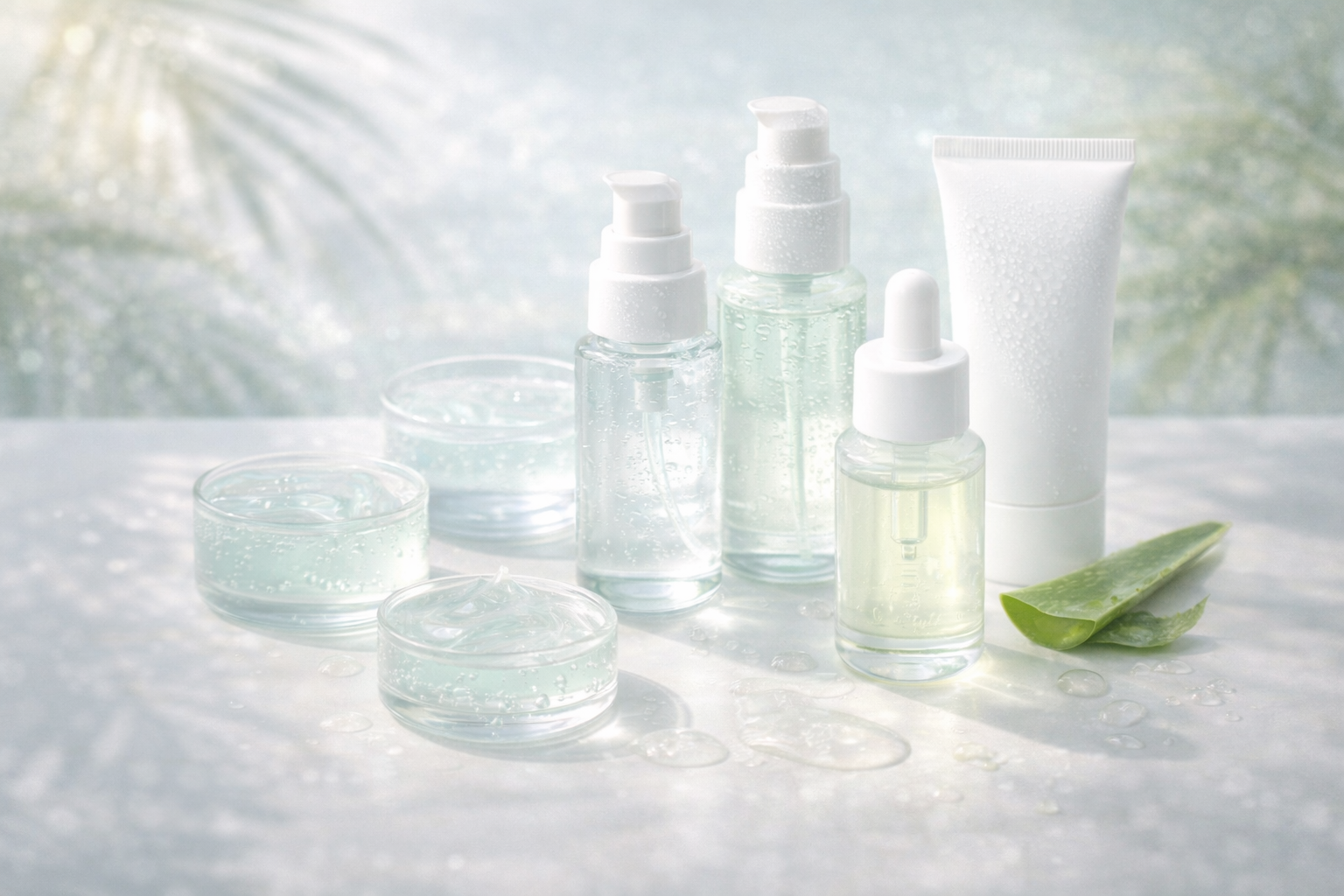
Acne in a temperate climate is frustrating; acne in Thailand’s tropical climate is a physiological siege. In high humidity, the skin’s environment changes drastically: sweat cannot evaporate, sebum liquefies, and the skin’s pH shifts, creating a perfect storm for Cutibacterium acnes proliferation.
Thai skincare has evolved specifically to counter this “Tropical Acne.” Unlike Western acne products that often rely on heavy drying agents (which fail when you sweat), Thai formulations prioritize breathable oil control, anti-bacterial botanicals, and humidity-resistant barrier support. This guide breaks down the science of treating acne in the heat, using the best local technologies.
SECTION 1 — Why Acne Behaves Differently in Tropical Humidity
To treat acne in Thailand, you must understand the Heat-Humidity-Sebum Triad:
- Thermal Sebum Surge: Research shows that for every 1°C rise in skin temperature, sebum excretion increases by ~10%. In Bangkok’s 35°C heat, your pores are flooding the skin surface with oil at a rate 30-40% higher than in a cool office.
- Hydration Occlusion: In 90% humidity, sweat doesn’t dry. It mixes with the excess sebum and dead skin cells to form a “sludge” that swells the corneal layer (stratum corneum). This swelling pinches the pore opening shut, trapping bacteria inside—a phenomenon known as Acne Aestivalis (Mallorca Acne).
- Microbiome Dysbiosis: The hot, wet environment encourages the overgrowth of not just C. acnes, but also Malassezia (yeast), leading to “Fungal Acne” (itchy, small bumps) which traditional acne creams often make worse.
SECTION 2 — Types of Acne (And Why It Matters for Product Choice)
Identifying your specific heat-induced acne is critical because the wrong treatment will inflame it further.
| Acne Type | Visual Characteristics | Tropical Trigger | Best Active |
|---|---|---|---|
| Comedonal (Heat Bumps) | Small, flesh-colored bumps; rough texture. No pus. | Sebum + Sweat plugging the pore. | Salicylic Acid (BHA) |
| Inflammatory (Papules) | Red, tender, swollen bumps. No white head yet. | Heat causing vasodilation + bacterial infection. | Tea Tree / Centella |
| Pustular (Whiteheads) | Red base with a white/yellow center. | Bacterial overgrowth exploding the follicle wall. | Sulfur / Zinc |
| Fungal (Malassezia) | Tiny, uniform, itchy bumps on forehead/chest. | Humidity + Sweat fermentation. | Ketoconazole / Zinc |
| PIH-Prone Acne | Acne leaves a dark brown/red mark immediately. | UV exposure stimulating melanocytes at the inflammation site. | Niacinamide |
SECTION 3 — Core Acne Actives in Thai Skincare
Thai formulations use specific actives that remain stable and effective in heat.
- Salicylic Acid (Encapsulated): Unlike standard BHA that can sting, Thai brands (like Gravich) often use Encapsulated Salicylic Acid. It releases slowly over 6 hours, providing continuous pore-clearing action without “flashing off” in the heat.
- Mangosteen Peel Extract (Garcinia Mangostana): The “Queen of Thai Acne Care.” It contains Xanthones (Alpha-Mangostin), which have potent anti-bacterial activity against C. acnes and anti-inflammatory properties superior to synthetic options, without the bleaching risk of Benzoyl Peroxide.
- Zinc PCA: A staple in Thai oily skin products. It reduces sebum production enzymatically and kills bacteria. It feels cooling and mattifying on the skin.
- Sulfur: Used in “Pink Mud” spot treatments (Oxecure). It dries out pustules quickly and is excellent for fungal acne due to its anti-fungal properties.
SECTION 4 — Thai Formulation Advantage for Oily Skin
Western acne products are often thick creams or drying lotions. Thai formulations are engineered for Compliance in Sweat.
- Fast-Evaporation Vehicles: Gels use volatile silicones or safe alcohols to deliver actives instantly and then disappear. This prevents the “sticky face” feeling that makes people wash off their skincare too early.
- Matte Polymers: Ingredients like Polymethylsilsesquioxane are added to serums to absorb oil throughout the day, acting like a liquid blotting paper.
- Non-Sticky Hydration: Instead of heavy oils, they use Aloe Vera and Biosaccharide Gum. These form a breathable film that hydrates without trapping heat (occlusion), preventing the “sauna effect” on your face.
SECTION 5 — How to Build a Thai Acne Routine (Step-by-Step)
The Golden Rule: In humidity, thin layers are better than one thick layer.
AM Routine (Defense & Oil Control)
- Cleanser: Salicylic Acid Gel Cleanser (e.g., Clear Nose). Removes overnight oil buildup.
- Toner: Pore-tightening toner (e.g., Plantnery Tea Tree). Resets pH.
- Serum: Niacinamide + Zinc serum (Oil regulation).
- Moisturizer: SKIP (if very oily) or use a Water-Gel.
- Sunscreen: Water-based SPF (Critical to prevent dark marks).
PM Routine (Treatment & Repair)
- Cleanser: Micellar Water -> Gentle Foam. (Double cleanse is mandatory to remove SPF).
- Treatment: Acne Serum or Spot Treatment (e.g., MizuMi Peptide Gel).
- Repair: Barrier Gel (Centella/Aloe) to heal the skin from the day’s heat.
SECTION 6 — Routine by Acne Type
Routine 1: Oily + Clogged Pores (The De-Congest)
- Goal: Keep oil flowing freely so it doesn’t plug.
- Key Product: Plantnery Tea Tree Intense Serum.
- Why: Tea Tree dissolves oil; Niacinamide tightens pores.
- PM Add-on: Use a Clay Mask (BK Acne Mask) 2x a week to physically pull out deep plugs.
Routine 2: Inflamed / Red Acne (The Cool Down)
- Goal: Reduce heat and kill bacteria without irritation.
- Key Product: MizuMi Peptide Acne Gel.
- Why: Uses peptides (Oligopeptide-10) to neutralize bacteria without the stinging of acids. Aloe vera base cools the inflammation.
- Tip: Keep your gel in the fridge for extra vasoconstriction (redness reduction).
Routine 3: Body Acne / Backne (The Sweat Fighter)
- Goal: Penetrate thick back skin and dry out sweat pimples.
- Key Product: Oxecure Body Acne Spray.
- Why: 1% Salicylic Acid + Mangosteen extract in a spray format. It reaches the back easily and dries instantly so it doesn’t stain clothes.
- Note: Use immediately after showering to prevent sweat-clogging.
Routine 4: Acne + PIH (The Mark Fader)
- Goal: Stop the acne and the dark spot simultaneously.
- Key Product: Clear Nose Dark Spot Serum.
- Why: Contains a blend of anti-acne botanicals plus brightening agents (Niacinamide/Vitamin C). It treats the “ghost” of the pimple while preventing new ones.
SECTION 7 — Oil Control vs. Over-Stripping: Balance Science
A common mistake in Thailand is “degreasing” the skin too aggressively (using strong soaps + alcohol toners).
- The Paradox: When you strip all oil in high humidity, your skin panics. It senses dehydration and pumps out more oil (Reactive Seborrhea).
- Barrier Damage: High heat weakens the skin barrier. Stripping cleansers create micro-cracks where bacteria enter.
- The Fix: Use pH-balanced cleansers (pH 5.5). Your skin should feel soft, not “squeaky clean.” The “squeak” is the sound of your barrier dying.
SECTION 8 — Common Mistakes in Tropical Acne Care
Checklist: Are you guilty of these?
- Over-Washing: Washing face >2 times a day stimulates oil glands. Use blotting papers instead.
- Skipping Moisturizer: “My skin is oily so I don’t need it.” False. Dehydrated skin produces sticky oil that clogs pores. Use a gel.
- Heavy Sunscreen: Using a creamy Western SPF. It traps heat. Switch to a Thai “Water Serum” SPF.
- DIY Lime/Toothpaste: Putting lime juice on acne causes Phytophotodermatitis (burns) in the sun. Toothpaste contains fluoride which can cause a rash.
SECTION 9 — How to Choose Thai Acne Products (Decision Guide)
Step 1: Identify the Root Cause.
- Is it heat/sweat related? -> Go for Oxecure (Spray) or Plantnery (Toner).
- Is it bacterial/cystic? -> Go for MizuMi (Peptide Gel) or Provamed (Retinol).
Step 2: Choose the Texture.
- Daytime: Must be a clear Gel or Water-Serum (Clear Nose).
- Nighttime: Can be a thicker lotion or spot paste.
Step 3: Check the Active.
- Sensitive Skin: Avoid Benzoyl Peroxide. Use Mangosteen or Tea Tree.
- Tough/Oily Skin: Use Salicylic Acid + Sulfur.
SECTION 10 — FAQ
Q: Why is acne worse in humidity?
A: Humidity prevents sweat evaporation. This creates a warm, moist film on the skin that swells the pores shut (hydration occlusion), trapping bacteria and oil inside.
Q: Can I use Retinol in Thailand?
A: Yes, but only at night. Provamed Acne Retinol-A Gel is a local favorite. You must wear strict sunscreen during the day as retinol thins the stratum corneum, making you prone to sunburn.
Q: Does Niacinamide help acne?
A: Yes. It reduces sebum production and calms the red inflammation. It is a cornerstone of Thai acne care because it works without drying out the skin.
Q: Are Thai acne gels effective?
A: Highly. Brands like MizuMi and Oxecure are clinically tested. They are often more effective for tropical acne than Western creams because the delivery systems are designed to penetrate sweat and oil.
Q: How do I reduce acne marks (PIH)?
A: Use a serum with Niacinamide + Vitamin C (like Clear Nose). Also, prevent new marks by not picking—acne marks in the sun darken permanently (solar lentigines).
CONCLUSION
Treating acne in Thailand requires a shift in strategy: Control the environment, not just the bacteria.
- Balance: Stop stripping your skin. Use pH-balanced cleansers.
- Breathability: Switch to Water-Gels and Serums.
- Targeting: Use Mangosteen and Salicylic Acid to keep pores clear.
By respecting the unique physiology of tropical skin, you can clear acne without destroying your moisture barrier.
Citations:
Analysis of skin barrier parameters and sebum production in Thai acne patients vs. controls.
Mechanism of action of Oxecure Body Spray (Salicylic Acid + Mangosteen) and Provamed Retinol Gel.
Ingredient efficacy of MizuMi Peptide Gel (Oligopeptide-10) and Clear Nose Cleanser/Serum.
Gravich Acnelogy formulation (Encapsulated Salicylic Acid) for sustained release.
Plantnery Tea Tree Toner/Serum ingredients (Melaleuca + Niacinamide).
Efficacy of Thai herbal extracts (Mangosteen, Centella) in anti-acne formulations.